South Florida’s beverage production industry faces unique challenges that northern facilities rarely encounter. The region’s tropical climate, with its intense heat, high humidity, and dramatic temperature fluctuations, creates demanding conditions for any manufacturing environment. When it comes to beverage production—particularly wine, craft beer, and specialty drinks—maintaining precise temperature control isn’t just important; it’s absolutely critical for product quality and safety.
The foundation of any successful beverage production facility starts literally from the ground up. While equipment, ventilation, and cooling systems often receive the most attention during facility planning, the flooring choice can make or break a facility’s ability to maintain consistent temperatures and operational efficiency. Traditional flooring options like tile, epoxy coatings, or sealed concrete often fail under South Florida’s challenging conditions, leading to costly maintenance, temperature control issues, and potential production disruptions.
Polished concrete has emerged as the superior flooring solution for beverage production facilities throughout South Florida. This advanced flooring system offers unparalleled thermal stability, moisture resistance, and durability that other options simply cannot match. Unlike surface coatings that can fail or crack under thermal stress, polished concrete becomes an integral part of the building’s thermal management system, helping maintain the stable temperatures essential for quality beverage production.
The science behind polished concrete’s thermal properties lies in its dense, non-porous surface structure. Through a multi-step grinding and polishing process, the concrete’s surface becomes incredibly smooth and dense, creating a thermal mass that naturally resists temperature fluctuations. This thermal stability is particularly valuable in winery operations, where even minor temperature variations can affect fermentation processes, wine quality, and storage conditions.
For South Florida beverage producers, the choice of flooring impacts everything from energy costs to product quality. A polished concrete winery floor doesn’t just look professional—it actively contributes to maintaining the controlled environment necessary for consistent, high-quality beverage production. As more facilities recognize these benefits, polished concrete for wineries has become the industry standard for serious producers who refuse to compromise on quality or operational efficiency.
Key Takeaways
Understanding the advantages of polished concrete in beverage production environments requires examining both the immediate and long-term benefits this flooring solution provides. The following key points highlight why South Florida beverage producers increasingly choose polished concrete for their facilities:
- Superior thermal stability: Polished concrete’s dense surface structure creates excellent thermal mass, naturally resisting temperature fluctuations that can compromise beverage quality. This stability reduces the workload on HVAC systems and helps maintain consistent production environments.
- Moisture resistance: The non-porous surface prevents moisture absorption, eliminating concerns about humidity-related floor damage, mold growth, or bacterial contamination that can threaten product safety and quality.
- Chemical resistance: Beverage production involves various cleaning chemicals, acids from fermentation processes, and sanitizing agents. Polished concrete withstands these substances without degrading, maintaining its protective properties over time.
- Easy maintenance: Unlike coated surfaces that require regular reapplication, polished concrete maintains its performance with simple cleaning protocols. This reduces downtime and maintenance costs while ensuring consistent sanitary conditions.
- Energy efficiency: The reflective properties of polished concrete improve lighting efficiency while its thermal mass helps stabilize temperatures, reducing overall energy consumption for climate control systems.
- Durability: Heavy equipment, frequent traffic, and thermal cycling don’t compromise properly installed polished concrete. This longevity provides excellent return on investment compared to flooring options requiring frequent replacement or repair.
- Seamless integration: Polished concrete works harmoniously with existing building systems, enhancing rather than complicating facility operations and maintenance procedures.
Overview of Temperature-Stable Flooring Requirements
South Florida’s beverage production facilities operate in one of the most challenging climatic environments in North America. Daily temperature swings, seasonal humidity variations, and the constant battle against heat infiltration create unique demands that standard flooring solutions simply cannot meet. Understanding these requirements is essential for facility managers, architects, and producers planning new installations or upgrades.
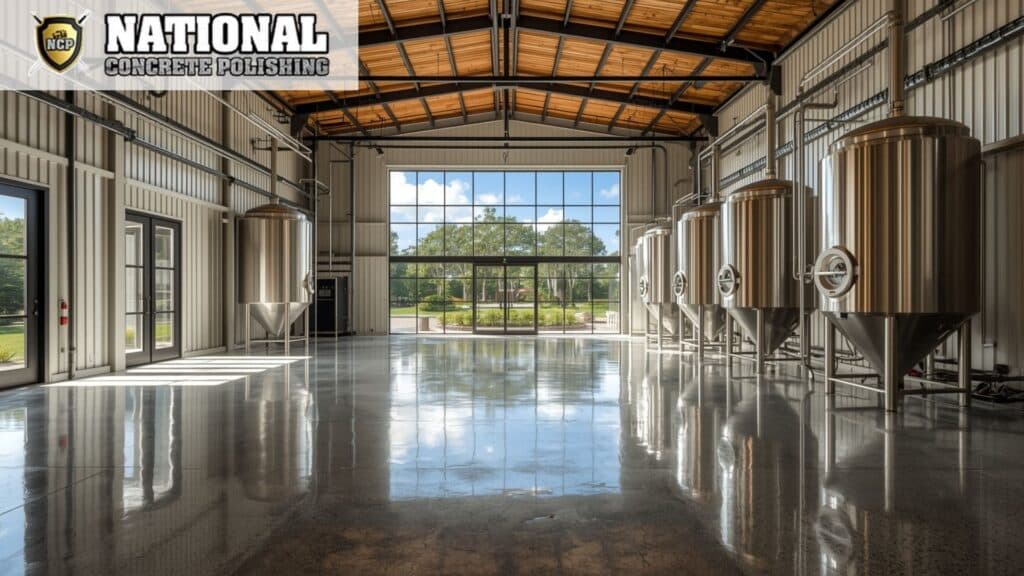
The primary challenge stems from South Florida’s tropical climate characteristics. Outdoor temperatures routinely exceed 90°F during summer months, while indoor production areas must maintain much cooler temperatures—often between 55-75°F depending on the specific beverage type and production stage. This dramatic temperature differential creates significant thermal stress on building materials, particularly flooring systems that must maintain their integrity and performance despite constant expansion and contraction cycles.
Humidity presents an additional complexity. South Florida’s relative humidity levels frequently exceed 80%, creating conditions where moisture infiltration becomes a constant threat. Traditional flooring materials often absorb this moisture, leading to dimensional changes, surface degradation, and potential contamination issues. In beverage production, where sanitation standards are paramount, any flooring system that harbors moisture creates unacceptable risks for bacterial growth and product contamination.
The thermal mass properties of polished concrete provide a natural solution to these challenges. Unlike surface treatments or thin flooring materials, polished concrete utilizes the building’s structural concrete as a massive thermal buffer. This thermal mass absorbs and releases heat slowly, dampening temperature fluctuations and reducing the stress on climate control systems. For winery operations, this stability is particularly valuable during fermentation processes, where temperature consistency directly impacts wine quality and character.
Beyond thermal considerations, beverage production facilities require flooring that can withstand frequent cleaning, chemical exposure, and heavy equipment loads. The production environment demands surfaces that remain non-slip when wet, resist staining from spills, and maintain their sanitary properties despite intensive use. Polished concrete meets all these requirements while providing the temperature stability that makes it ideal for South Florida’s challenging environment.
Thermal Mass Properties of Polished Concrete
The exceptional temperature stability of polished concrete stems from fundamental thermal physics principles that make concrete one of nature’s most effective thermal mass materials. When properly prepared and polished, concrete floors become sophisticated thermal management systems that actively contribute to facility climate control while providing a durable, sanitary surface for beverage production operations.
Thermal mass refers to a material’s ability to absorb, store, and slowly release thermal energy. Concrete excels in this role due to its high density and specific heat capacity. A typical polished concrete floor contains approximately 150 pounds of material per cubic foot, creating substantial thermal inertia that resists rapid temperature changes. This property becomes invaluable in South Florida beverage facilities, where external heat loads constantly challenge internal climate control systems.
The polishing process enhances these natural thermal properties by creating an extremely dense, non-porous surface layer. Through progressive grinding with increasingly fine diamond abrasives, the concrete surface becomes densified and hardened. This process eliminates surface porosity that could allow air infiltration or moisture absorption, both of which would compromise thermal performance. The result is a surface that maintains consistent thermal conductivity and heat transfer characteristics throughout its service life.
During hot South Florida days, polished concrete floors absorb excess heat from the facility’s interior, preventing rapid temperature spikes that could affect sensitive beverage production processes. As external temperatures cool during evening hours, the concrete slowly releases this stored thermal energy, helping maintain stable temperatures with reduced HVAC system cycling. This thermal flywheel effect significantly improves energy efficiency while providing the temperature consistency essential for quality beverage production.
The thermal conductivity of polished concrete also facilitates effective radiant cooling strategies. Many modern beverage facilities incorporate radiant cooling systems within their concrete floors, using the polished surface as a heat exchange medium. The excellent thermal transfer properties of polished concrete make these systems highly efficient, providing uniform cooling throughout the facility while maintaining the surface temperatures necessary for condensation control.
For winery applications, thermal mass becomes particularly critical during fermentation periods. Wine fermentation generates significant heat, and temperature control during this process directly affects wine quality, flavor development, and alcohol content. Polished concrete floors help buffer these thermal loads, working in conjunction with mechanical cooling systems to maintain the precise temperature ranges required for optimal fermentation outcomes.
Research has demonstrated that facilities with polished concrete floors experience temperature variations 30-40% smaller than those with alternative flooring systems. This stability translates directly into improved product quality, reduced energy costs, and enhanced operational efficiency. For South Florida beverage producers, these benefits provide compelling economic justification for choosing polished concrete flooring systems.
Moisture Control and Humidity Resistance
South Florida’s persistently high humidity levels create ongoing challenges for beverage production facilities, where moisture control directly impacts product quality, equipment longevity, and facility sanitation. Polished concrete’s superior moisture resistance properties make it an essential component of comprehensive humidity management strategies in these demanding environments.
The polishing process fundamentally alters concrete’s surface characteristics, transforming a naturally porous material into a dense, non-absorptive surface. Traditional concrete contains millions of microscopic pores and capillaries that readily absorb moisture from the surrounding environment. Through progressive grinding and polishing, these surface pores are mechanically closed and filled with concrete fines, creating a surface that effectively repels moisture infiltration.
This moisture resistance provides multiple benefits for beverage production operations. First, it eliminates the substrate moisture that could support bacterial or mold growth, maintaining the sanitary conditions essential for food and beverage safety. Unlike porous surfaces that can harbor contaminants in microscopic spaces, polished concrete presents a uniform, cleanable surface that supports rigorous sanitation protocols.
Humidity control becomes particularly critical in winery operations, where moisture levels affect everything from cork storage to fermentation processes. Excessive humidity can promote unwanted microbial activity, while insufficient humidity can lead to excessive evaporation and concentration changes in aging beverages. Polished concrete floors don’t contribute to facility humidity levels through moisture absorption and release, providing a stable foundation for precise humidity control systems.
The non-porous surface also prevents the moisture-related dimensional changes that plague other flooring materials. Traditional concrete, unsealed tile, and many coating systems expand and contract with moisture absorption cycles, leading to cracking, joint failure, and surface degradation. These issues create maintenance headaches and potential contamination sources in beverage production environments where sanitation is paramount.
Cleaning and sanitizing procedures benefit significantly from polished concrete’s moisture resistance. The surface doesn’t absorb cleaning solutions or rinse water, allowing for thorough cleaning without concerns about trapped moisture or chemical residues. This characteristic is particularly valuable in facilities requiring frequent washdowns or those using aggressive sanitizing agents to maintain food safety standards.
Condensation control represents another critical advantage. In South Florida’s humid climate, temperature differentials between cool interior spaces and warm exterior conditions create significant condensation potential. Polished concrete’s thermal mass properties help minimize these temperature differentials, while its non-absorptive surface prevents condensation from being absorbed into the floor structure where it could cause long-term damage or create sanitation issues.
For facilities incorporating radiant cooling systems, moisture resistance becomes essential for system protection. Any moisture infiltration into the concrete structure could compromise embedded cooling lines or create corrosion issues. Polished concrete’s moisture barrier properties protect these valuable building systems while maintaining their operational efficiency throughout the facility’s service life.
Chemical Resistance in Beverage Production Environments
Beverage production facilities expose flooring systems to a complex array of chemical challenges that would quickly degrade lesser materials. From acidic fermentation byproducts to aggressive cleaning chemicals and sanitizing agents, the flooring must maintain its integrity and performance despite constant chemical exposure. Polished concrete’s exceptional chemical resistance makes it ideally suited for these demanding applications.
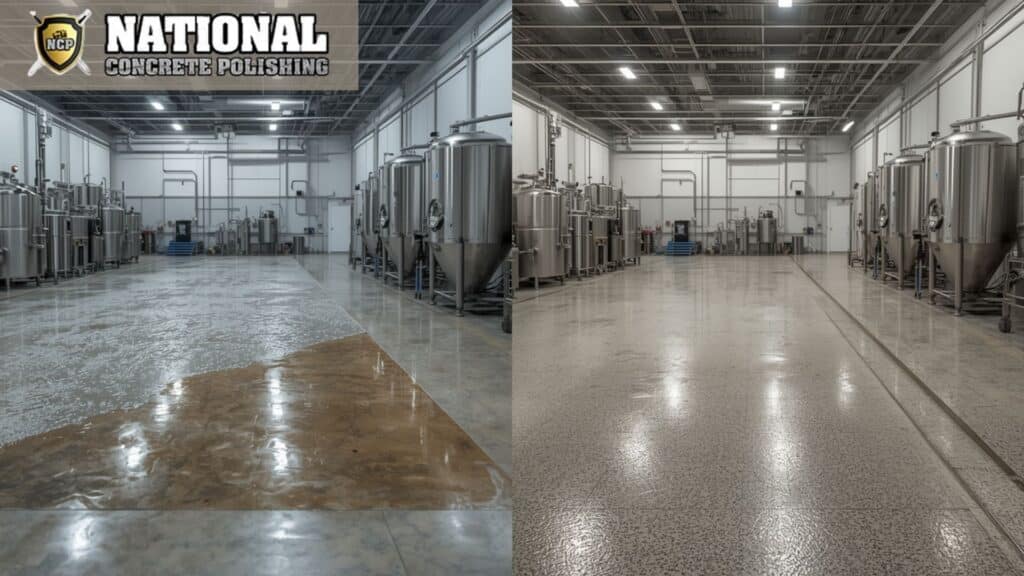
The chemical resistance of polished concrete stems from its dense, non-porous surface structure combined with concrete’s inherently alkaline nature. During the polishing process, the surface becomes so densified that chemical penetration becomes virtually impossible. Unlike coated surfaces where chemicals can eventually penetrate to the substrate, polished concrete presents a monolithic barrier that maintains its protective properties throughout its service life.
Winery operations present particularly challenging chemical environments. Fermentation processes naturally produce various acids, including tartaric, malic, and lactic acids, which can be highly corrosive to unsuitable flooring materials. Wine production also involves cleaning protocols using caustic solutions, acid cleaners, and sanitizing agents containing quaternary ammonium compounds or chlorine-based chemicals. Polished concrete withstands all these substances without surface degradation or performance loss.
Craft breweries and distilleries create their own chemical challenges. The brewing process involves exposure to various organic acids, while cleaning procedures require strong alkaline cleaners to remove protein and carbohydrate residues. Distillation operations may involve ethanol spills and cleaning solvents that would damage many flooring materials. The chemical inertness of properly polished concrete ensures these substances don’t compromise floor performance or create safety hazards.
Cleaning chemical compatibility represents a crucial consideration for facility managers. Many industrial cleaning products contain aggressive solvents, acids, or alkaline compounds that can attack flooring materials over time. Polished concrete’s broad chemical compatibility allows facilities to use the most effective cleaning products without concerns about floor damage, ensuring optimal sanitation while protecting the flooring investment.
The absence of surface coatings eliminates a common failure mode in chemically aggressive environments. Epoxy coatings, polyurethane sealers, and similar surface treatments may initially provide chemical resistance, but they inevitably degrade under constant chemical exposure. Once compromised, these coatings can actually trap chemicals against the substrate, accelerating damage and creating maintenance nightmares. Polished concrete eliminates this concern by providing chemical resistance as an integral property of the floor surface itself.
Spill response procedures benefit significantly from polished concrete’s chemical resistance. Immediate cleanup isn’t always possible in busy production environments, and some chemical spills may go unnoticed for extended periods. The non-reactive surface of polished concrete prevents chemical absorption or surface etching, allowing effective cleanup even after prolonged contact. This resilience provides valuable insurance against costly floor repairs or replacements due to chemical damage.
For facilities requiring FDA compliance or other regulatory standards, chemical resistance documentation becomes important. Polished concrete’s well-established chemical resistance properties are thoroughly documented and accepted by regulatory agencies, simplifying compliance documentation and facility certification processes. This regulatory acceptance provides additional confidence for facility managers responsible for maintaining food safety standards.
Installation Considerations for South Florida Climate
Successful polished concrete installation in South Florida’s challenging climate requires specialized knowledge, proper planning, and careful attention to environmental factors that don’t affect installations in more temperate regions. The combination of high temperatures, intense humidity, frequent rainfall, and seasonal weather patterns creates unique installation challenges that experienced contractors must navigate to ensure optimal results.
Timing represents the first critical consideration for South Florida installations. The region’s pronounced wet and dry seasons significantly impact concrete placement and curing conditions. The optimal installation window typically occurs during the drier months from November through April, when humidity levels are more manageable and rainfall is less frequent. However, production facilities often cannot accommodate extended shutdowns, requiring contractors to develop strategies for successful installation during less favorable conditions.
Moisture management during installation becomes particularly complex in South Florida’s humid environment. Concrete curing generates significant heat, and high ambient humidity can interfere with proper moisture evaporation from the concrete surface. This can lead to surface defects, delayed curing, and potential long-term performance issues. Experienced contractors use dehumidification equipment, enhanced ventilation, and modified curing procedures to manage these challenges effectively.
The existing concrete substrate requires careful evaluation before polishing can begin. South Florida’s climate can cause unique concrete issues, including alkali-silica reaction from certain aggregates, salt infiltration in coastal areas, and moisture-related deterioration. National Concrete Polishing’s experienced technicians thoroughly assess substrate conditions and implement appropriate remediation measures before beginning the polishing process.
Temperature control during installation affects both the polishing process and final surface quality. Extreme heat can cause rapid moisture loss from concrete, leading to surface dusting or reduced polish quality. Conversely, excessive humidity can interfere with the densification process that creates polished concrete’s superior properties. Professional contractors monitor environmental conditions continuously and adjust their procedures accordingly to ensure optimal results.
The multi-step polishing process requires particular attention in South Florida’s environment. Each grinding and polishing stage must be completed under appropriate conditions to achieve the desired surface density and appearance. High humidity can interfere with dust collection systems, while temperature extremes may affect equipment performance and operator comfort. Proper scheduling and environmental controls ensure each process stage achieves its intended results.
Facility operations often cannot be completely suspended during polishing installation, requiring careful coordination between contractors and production staff. The polishing process generates noise and dust that must be controlled to prevent contamination of sensitive production areas. Professional contractors use advanced dust collection systems, sound barriers, and phased installation approaches to minimize operational disruptions while maintaining product safety standards.
Quality control procedures must account for South Florida’s unique environmental factors. Surface hardness testing, gloss measurements, and other quality metrics may be affected by temperature and humidity conditions during testing. Experienced contractors understand these variables and adjust their quality control procedures to ensure accurate assessment of the finished surface properties.
Post-installation protection becomes critical in South Florida’s aggressive environment. The newly polished surface requires protection from construction activities, weather exposure, and premature loading until it reaches full strength. Professional contractors provide detailed protection protocols and schedule follow-up inspections to ensure the polished surface achieves its intended performance characteristics.
Frequently Asked Questions
How long does polished concrete last in South Florida’s climate?
Properly installed and maintained polished concrete can last 20-30 years or more in South Florida’s challenging environment. The dense, non-porous surface resists moisture infiltration, thermal cycling, and chemical exposure that typically limit other flooring options’ service life. Regular maintenance involves simple cleaning protocols without the need for recoating or refinishing procedures required by alternative flooring systems.
What maintenance is required for polished concrete in beverage facilities?
Maintenance requirements are minimal compared to other flooring options. Daily cleaning involves standard mopping with neutral pH cleaners, while periodic deep cleaning may use specialized concrete cleaners for heavy soil removal. The surface doesn’t require waxing, sealing, or refinishing, significantly reducing long-term maintenance costs and facility downtime.
Can polished concrete handle the temperature fluctuations in South Florida wineries?
Yes, polished concrete’s thermal mass properties make it exceptionally well-suited for temperature fluctuations. The dense concrete structure absorbs and releases heat slowly, helping stabilize facility temperatures and reducing stress on HVAC systems. This thermal stability is particularly beneficial during fermentation processes where temperature consistency affects wine quality.
How does polished concrete compare to epoxy flooring for beverage production?
Polished concrete offers superior durability, chemical resistance, and thermal stability compared to epoxy coatings. While epoxy may provide initial cost savings, it requires periodic reapplication and is susceptible to chemical damage, thermal cycling, and moisture infiltration. Polished concrete provides a permanent solution with lower lifecycle costs and better performance in demanding beverage production environments.
Is polished concrete slip-resistant when wet?
Yes, properly finished polished concrete maintains good slip resistance even when wet. The polishing process can be adjusted to achieve specific slip resistance values required for safety compliance. Unlike smooth coatings that become dangerously slippery when wet, polished concrete’s texture provides reliable traction for safe operations in frequently washed production areas.
Can polished concrete be installed in existing facilities without major disruption?
Installation can often be completed in phases to minimize operational disruption. The polishing process typically requires 3-5 days depending on facility size and existing concrete conditions. Professional contractors work with facility managers to develop installation schedules that accommodate production requirements while ensuring optimal results.
What are the energy savings associated with polished concrete floors?
Energy savings typically range from 15-30% due to improved thermal mass, enhanced lighting efficiency from the reflective surface, and reduced HVAC cycling. The exact savings depend on facility size, existing systems, and operational patterns. Many facilities see payback periods of 3-5 years from energy savings alone, not including reduced maintenance costs and improved operational efficiency.
How does polished concrete support food safety requirements?
The non-porous, seamless surface eliminates harboring places for bacteria and other contaminants. The surface can be easily cleaned and sanitized using standard food industry protocols. Polished concrete meets or exceeds FDA and USDA requirements for food production facilities, providing documentation support for regulatory compliance and facility certifications.
Conclusion
The demanding environment of South Florida beverage production requires flooring solutions that can withstand extreme climate conditions while supporting the precise operational requirements of quality beverage manufacturing. Polished concrete has proven itself as the superior choice for these challenging applications, providing unmatched thermal stability, moisture resistance, and durability that other flooring options simply cannot match.
The thermal mass properties of polished concrete create a natural climate control system that helps maintain the stable temperatures essential for consistent beverage quality. Whether supporting wine fermentation processes, craft beer production, or specialty beverage manufacturing, polished concrete floors actively contribute to facility climate control while reducing energy costs and operational complexity. This thermal stability becomes particularly valuable in South Florida’s aggressive climate, where temperature control challenges would overwhelm lesser flooring systems.
Beyond thermal performance, polished concrete’s comprehensive resistance to moisture, chemicals, and physical wear ensures long-term reliability in demanding production environments. The non-porous surface supports rigorous sanitation protocols while eliminating the maintenance headaches associated with coated surfaces or porous materials. For facility managers focused on operational efficiency and product quality, these characteristics provide compelling advantages that translate directly into improved profitability and reduced risk.
National Concrete Polishing brings the specialized expertise necessary for successful polished concrete installation in South Florida’s unique environment. Their understanding of local climate challenges, regulatory requirements, and beverage industry needs ensures optimal results that support long-term facility success. The investment in professional polished concrete installation provides returns through reduced energy costs, minimal maintenance requirements, and the operational reliability essential for competitive beverage production.
As South Florida’s beverage industry continues to grow and evolve, the flooring foundation supporting these operations must provide unwavering performance despite environmental challenges. Polished concrete offers the thermal stability, durability, and operational advantages that forward-thinking beverage producers require for sustained success in this competitive market.
source https://nationalconcretepolishing.net/polished-concrete-winery/


No comments:
Post a Comment