Miami’s athletic facilities demand flooring solutions that can withstand intense daily use while maintaining safety standards and aesthetic appeal. Whether you’re managing a professional sports complex, university gymnasium, or community recreation center, the choice of flooring material significantly impacts both performance and long-term operational costs. Epoxy flooring has emerged as the preferred solution for sports facilities throughout Miami, offering unmatched durability, safety features, and design flexibility that traditional flooring options simply cannot match.
The unique climate conditions in Miami present specific challenges for athletic facility flooring. High humidity, temperature fluctuations, and the constant threat of moisture infiltration require flooring systems that can adapt and perform consistently. Epoxy floor Miami sports facility installations have proven their worth by providing seamless, non-porous surfaces that resist moisture damage while offering superior traction for athletes across various sports disciplines.
Athletic facilities in Miami serve diverse purposes, from basketball and volleyball courts to fitness centers and multi-purpose training areas. Each application requires specific performance characteristics, including impact resistance, slip resistance, and the ability to accommodate heavy equipment loads. Epoxy flooring systems can be customized to meet these varied requirements while providing a unified aesthetic throughout the facility.
The investment in quality flooring extends beyond initial installation costs. Facility managers must consider long-term maintenance requirements, replacement schedules, and the impact of downtime on facility operations. Epoxy flooring systems offer significant advantages in all these areas, with minimal maintenance requirements and the ability to be refinished rather than completely replaced when wear patterns eventually develop.
Modern epoxy formulations have evolved to address the specific needs of athletic environments. Advanced polymer technologies provide enhanced flexibility to accommodate substrate movement, while specialized aggregate additions improve traction without compromising cleanability. These innovations have made epoxy flooring the go-to choice for facility managers who demand both performance and practicality.
Key Takeaways
Understanding the benefits and considerations of epoxy flooring for athletic facilities helps facility managers make informed decisions that impact both immediate performance and long-term operational success.
Durability and Longevity: Epoxy flooring systems typically last 15-20 years in athletic environments when properly installed and maintained, significantly outperforming traditional flooring options that may require replacement every 5-10 years.
Safety Performance: Modern epoxy systems can be formulated with specific slip resistance ratings to meet safety standards for various sports, with customizable traction levels that don’t compromise ball bounce characteristics.
Moisture Resistance: The seamless, non-porous nature of epoxy flooring prevents moisture infiltration that can lead to mold, mildew, and structural damage in Miami’s humid climate.
Design Flexibility: Epoxy systems accommodate complex court markings, logos, and color schemes while maintaining consistent performance characteristics across different zones within the same facility.
Maintenance Efficiency: Daily cleaning requires only basic mopping with mild detergents, while periodic deep cleaning can restore the surface to near-original condition without specialized equipment.
Cost Effectiveness: While initial installation costs may be higher than some alternatives, the extended lifespan and reduced maintenance requirements result in lower total cost of ownership.
Installation Speed: Professional epoxy installation typically allows facilities to return to service within 3-5 days, minimizing disruption to athletic programs and revenue generation.
Overview of Athletic Facility Epoxy Flooring Systems
Athletic facility epoxy flooring represents a sophisticated approach to sports surface engineering that addresses the complex demands of modern recreational and competitive environments. These systems combine advanced polymer chemistry with specialized application techniques to create surfaces that perform consistently under extreme conditions while maintaining their appearance and safety characteristics over extended periods.
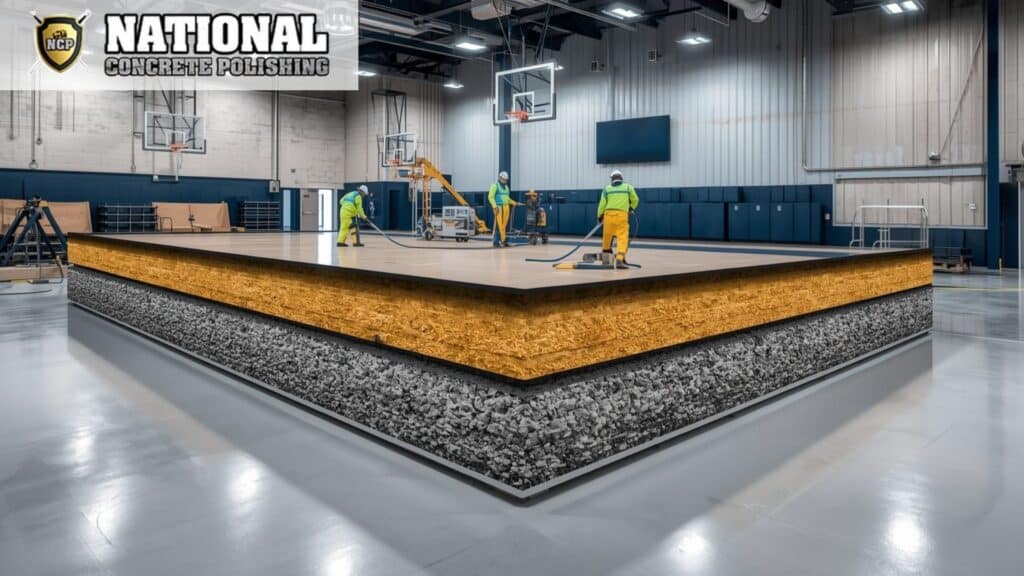
The foundation of any successful epoxy flooring installation begins with proper substrate preparation. In athletic facilities, this often involves addressing existing concrete surfaces that may have been damaged by previous flooring installations or compromised by moisture infiltration. Professional contractors assess substrate conditions using moisture testing equipment and concrete hardness measurements to determine the appropriate preparation methods and primer systems.
Modern epoxy formulations for athletic facilities typically employ multiple coat systems that build performance characteristics layer by layer. The primer coat ensures proper adhesion to the prepared substrate while providing moisture vapor transmission control. Base coats establish the primary structural properties of the system, including impact resistance and flexibility. Topcoat systems provide wear resistance, traction control, and aesthetic properties that define the final performance characteristics.
Sports facility flooring options have evolved significantly with advances in epoxy technology. Self-leveling systems can correct minor substrate irregularities while providing perfectly flat surfaces essential for ball sports. Broadcast systems incorporate specialized aggregates that provide controlled traction without creating maintenance challenges. Decorative systems allow for complex graphics and court markings to be permanently integrated into the flooring surface rather than applied as separate materials that may wear or delaminate over time.
The curing characteristics of athletic facility epoxy systems are carefully engineered to accommodate the realities of facility operations. Fast-cure formulations allow installations to proceed during brief facility closures, while standard systems provide extended working times for complex installations involving detailed graphics or multiple color zones. Temperature and humidity control during installation ensures optimal curing and final performance characteristics.
Performance Characteristics and Safety Standards
The performance requirements for athletic facility flooring extend far beyond basic durability considerations. Sports surfaces must provide consistent ball bounce characteristics, appropriate traction levels for different activities, and impact absorption properties that reduce athlete fatigue and injury risk. Epoxy flooring systems can be engineered to meet these specific performance criteria while maintaining the practical advantages that make them attractive to facility operators.
Slip resistance represents one of the most critical safety considerations for athletic flooring. Standard test methods such as ASTM D3389 provide quantitative measurements of surface traction under both dry and wet conditions. Epoxy systems can be formulated with aggregate additions or surface texturing that achieves specific slip resistance values appropriate for different sports. Basketball courts typically require moderate traction levels that allow for controlled sliding during defensive movements, while fitness areas may need higher traction levels to accommodate diverse footwear and exercise patterns.
Impact resistance testing evaluates the ability of flooring systems to withstand concentrated loads from dropped weights, equipment impacts, and the repetitive stress of athletic activities. Epoxy systems demonstrate superior performance in these tests compared to traditional flooring materials, with the ability to absorb and distribute impact forces without cracking or delamination. This characteristic proves particularly important in facilities that accommodate both traditional sports and modern fitness activities involving heavy equipment.
Ball bounce consistency affects the quality of play in court sports and must meet specific standards established by governing bodies for different sports. Epoxy flooring systems can be engineered to provide uniform ball bounce characteristics across the entire playing surface, eliminating dead spots or areas of inconsistent performance that can affect game outcomes. The seamless nature of epoxy systems contributes to this consistency by eliminating joints or seams that might create variations in ball response.
Temperature stability becomes particularly important in Miami’s climate, where facility temperatures may fluctuate significantly due to air conditioning cycles and external weather conditions. Advanced epoxy formulations incorporate flexible polymer components that accommodate thermal expansion and contraction without compromising surface integrity. This flexibility prevents the cracking and joint separation that can occur with rigid flooring materials.
Chemical resistance protects athletic facility flooring from cleaning products, sports drinks, and other substances that may be spilled during normal facility operations. Epoxy systems provide excellent resistance to most common chemicals while remaining easy to clean and sanitize. This characteristic proves essential for maintaining hygienic conditions in facilities that serve large numbers of users throughout the day.
Installation Process and Timeline Considerations
The installation of epoxy flooring in athletic facilities requires careful coordination between contractors, facility managers, and user groups to minimize disruption while ensuring optimal results. Professional installation typically follows a structured timeline that accounts for surface preparation, environmental conditions, and curing requirements specific to athletic applications.
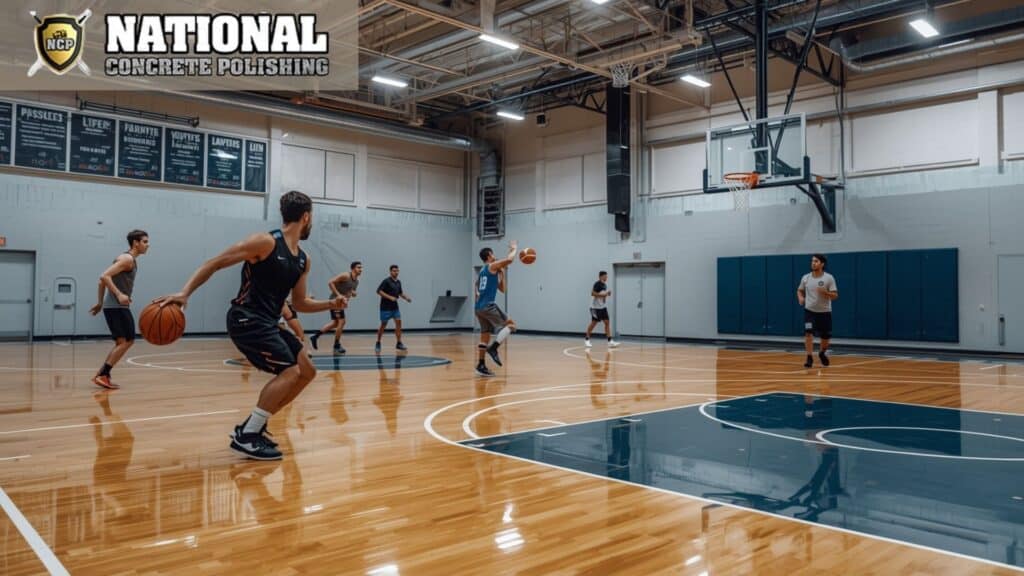
Pre-installation planning begins with comprehensive facility assessment and user scheduling coordination. Contractors evaluate existing flooring conditions, substrate moisture levels, and environmental control systems to develop installation specifications that will perform reliably in the specific facility conditions. This assessment phase often reveals hidden issues such as moisture problems or structural deficiencies that must be addressed before epoxy installation can proceed successfully.
Surface preparation represents the most critical phase of athletic facility epoxy installation. Existing flooring materials must be completely removed, and concrete substrates must be prepared to achieve the surface profile necessary for proper epoxy adhesion. Diamond grinding or shot blasting techniques create the mechanical anchor pattern required for long-term bond strength. Dust removal and surface cleaning ensure that no contaminants interfere with the chemical bond between epoxy and substrate.
Environmental control during installation affects both the quality of the final installation and the timeline for return to service. Temperature and humidity levels must be maintained within specific ranges throughout the installation and curing process. In Miami’s climate, this often requires coordination with facility HVAC systems and may necessitate temporary environmental control measures during installation periods.
The application sequence for multi-coat epoxy systems requires precise timing to ensure proper inter-coat adhesion while maintaining installation efficiency. Primer coats must cure sufficiently to support subsequent coats without becoming so hard that mechanical abrasion is required between coats. Base coat application establishes the primary thickness and performance characteristics of the system. Topcoat application provides final appearance and wear resistance properties.
Court marking and graphics installation requires specialized techniques that integrate permanently with the epoxy system rather than relying on applied materials that may wear or delaminate. Professional contractors use precision masking techniques and specialized marking paints that chemically bond with the epoxy substrate. Multiple color applications require careful sequencing to prevent contamination while maintaining sharp line definition.
Curing and return-to-service timelines vary based on specific epoxy formulations and environmental conditions. Fast-cure systems may allow light foot traffic within 24 hours and full service within 48-72 hours. Standard systems typically require 3-5 days for complete cure and return to full athletic use. Facility managers must coordinate these timelines with athletic schedules and other facility commitments to minimize operational disruption.
Quality control testing during and after installation ensures that the completed system meets performance specifications. This may include adhesion testing, slip resistance verification, and visual inspection for defects or inconsistencies. Professional contractors provide documentation of test results and warranty coverage that protects facility investments.
Maintenance and Long-term Performance
The long-term success of epoxy flooring in athletic facilities depends heavily on implementing appropriate maintenance protocols that preserve both performance characteristics and aesthetic appearance. Unlike traditional flooring materials that may require frequent refinishing or replacement, properly maintained epoxy systems can provide decades of reliable service with relatively minimal intervention.
Daily maintenance routines for athletic facility epoxy flooring focus on removing debris and moisture that could affect traction or appearance. Dust mopping or sweeping removes loose dirt and prevents abrasive particles from being ground into the surface during athletic activities. Damp mopping with pH-neutral cleaners removes perspiration, sports drinks, and other substances that might otherwise build up and create slip hazards or staining.
Weekly deep cleaning procedures address more stubborn soils and maintain the hygienic conditions essential in athletic environments. Automatic scrubbing equipment can be used safely on epoxy surfaces, provided that appropriate pad selection and cleaning solutions are employed. The seamless nature of epoxy flooring eliminates the grout lines and seams that can harbor bacteria in traditional flooring systems, making thorough sanitization more achievable.
Periodic maintenance assessment allows facility managers to identify potential issues before they become significant problems. Professional inspection services can evaluate surface wear patterns, identify areas where additional traction may be needed, and recommend preventive maintenance measures. Early identification of minor issues often prevents minor issues from developing into conditions that require extensive repair or refinishing.
Traffic pattern management helps distribute wear evenly across athletic facility flooring and extends overall system life. Strategic placement of equipment and rotation of activity areas prevents the concentrated wear that can occur in high-use zones. Protective measures during non-athletic events, such as concerts or exhibitions, prevent damage from equipment that might not be compatible with sports flooring.
Refinishing and restoration procedures can extend the life of epoxy athletic flooring systems well beyond their initial performance period. Surface preparation and recoating of high-wear areas can restore original appearance and performance characteristics at a fraction of the cost of complete replacement. Professional contractors can often perform these procedures during brief facility closures without disrupting long-term athletic schedules.
Damage repair techniques address isolated problems without requiring extensive system replacement. Small chips or scratches can often be repaired using matching materials and professional application techniques. More extensive damage may require partial system replacement in affected areas, but the modular nature of epoxy systems allows these repairs to blend seamlessly with existing flooring.
Performance monitoring throughout the service life of athletic facility epoxy flooring provides valuable data for future flooring decisions. Tracking maintenance costs, user satisfaction, and performance characteristics helps facility managers optimize their flooring investments and plan for eventual replacement or upgrading. This data also proves valuable when evaluating flooring options for additional facilities or renovation projects.
National Concrete Polishing brings extensive experience in athletic facility flooring maintenance and can provide comprehensive programs that protect facility investments while ensuring optimal performance throughout the service life of epoxy flooring systems. Their maintenance expertise helps facilities avoid common problems and maximize the return on their flooring investments.
Cost Analysis and Return on Investment
Understanding the complete financial picture of athletic facility epoxy flooring requires analysis that extends beyond initial installation costs to encompass maintenance expenses, replacement schedules, and operational impacts throughout the system’s service life. This comprehensive approach often reveals significant advantages for epoxy systems compared to alternative flooring options.
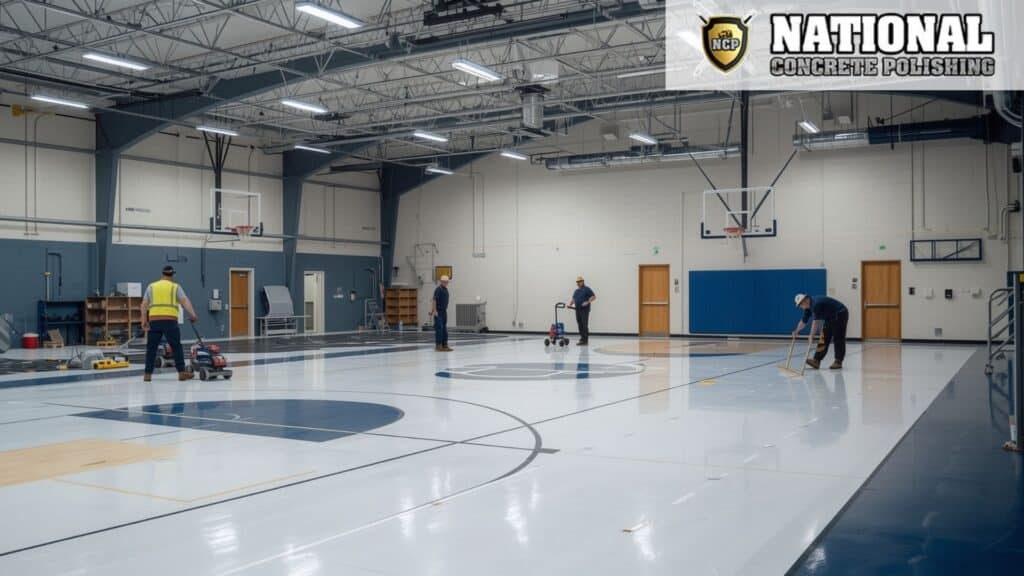
Initial installation costs for epoxy athletic facility flooring vary based on facility size, substrate conditions, performance requirements, and design complexity. While epoxy systems may require higher upfront investment compared to some alternatives, this cost difference often represents a small percentage of total lifecycle expenses. Professional cost analysis should include substrate preparation requirements, which may be more extensive for epoxy systems but contribute significantly to long-term performance.
Maintenance cost comparisons demonstrate significant advantages for epoxy flooring systems in athletic applications. Traditional flooring materials may require periodic refinishing, frequent replacement of surface materials, or specialized maintenance procedures that add to operational expenses. Epoxy systems typically require only basic cleaning procedures and occasional professional maintenance, resulting in substantially lower annual maintenance costs.
Operational efficiency benefits contribute to the overall value proposition of athletic facility epoxy flooring. The quick cleaning characteristics of epoxy surfaces reduce labor requirements for facility maintenance staff. The seamless, non-porous nature of epoxy flooring eliminates many of the sanitation challenges associated with traditional flooring materials, reducing both labor costs and the risk of facility closures due to hygiene issues.
Replacement schedule analysis reveals perhaps the most significant financial advantage of epoxy athletic facility flooring. While traditional materials may require replacement every 5-10 years, properly installed and maintained epoxy systems often provide 15-20 years of service before requiring major renovation. This extended service life dramatically reduces the annualized cost of flooring and minimizes the operational disruption associated with major flooring projects.
Energy efficiency considerations may also contribute to the overall value of epoxy flooring systems. The light-reflective properties of epoxy surfaces can reduce lighting requirements in athletic facilities, while the thermal properties of epoxy systems may contribute to more efficient HVAC operation. These benefits typically represent modest but measurable contributions to operational cost reduction.
Insurance and liability considerations increasingly favor flooring systems that provide documented safety performance and require minimal maintenance to maintain their safety characteristics. Epoxy systems’ consistent slip resistance and impact absorption properties, combined with their resistance to damage and deterioration, may contribute to reduced liability exposure and potentially lower insurance costs.
Facility utilization benefits result from the minimal downtime required for epoxy flooring maintenance and the extended periods between major flooring projects. Athletic facilities generate revenue through user fees, equipment rentals, and event hosting, making any reduction in available operating time costly. The durability and low maintenance requirements of epoxy systems maximize facility availability and revenue generation potential.
National Concrete Polishing provides comprehensive cost analysis services that help facility managers understand the complete financial picture of their flooring decisions. Their experience with athletic facility projects enables accurate projections of lifecycle costs and realistic assessment of return on investment for epoxy flooring systems.
Frequently Asked Questions
How long does epoxy flooring last in high-traffic athletic facilities?
Properly installed epoxy flooring systems typically provide 15-20 years of service in athletic facilities when maintained according to manufacturer recommendations. The actual lifespan depends on usage intensity, maintenance quality, and environmental conditions, but epoxy consistently outperforms traditional flooring materials in longevity testing.
Can epoxy flooring accommodate multiple sports in the same facility?
Yes, epoxy systems can be engineered to meet the performance requirements of multiple sports within a single facility. Different zones can be formulated with varying traction levels, ball bounce characteristics, and impact resistance properties while maintaining a unified appearance throughout the facility.
What happens if the epoxy flooring is damaged during athletic activities?
Minor damage such as scratches or small chips can typically be repaired using matching materials without affecting the surrounding flooring. More extensive damage may require partial replacement of affected areas, but the seamless nature of epoxy systems allows repairs to blend invisibly with existing flooring.
How quickly can an athletic facility return to service after epoxy installation?
Return-to-service timelines vary based on specific epoxy formulations and environmental conditions. Fast-cure systems may allow limited use within 24-48 hours, while full athletic activities typically resume within 3-5 days of installation completion.
Does epoxy flooring require special cleaning products or procedures?
Epoxy athletic flooring requires only basic cleaning with pH-neutral detergents and standard mopping procedures. The seamless, non-porous surface actually simplifies cleaning compared to traditional flooring materials and does not require specialized or expensive cleaning products.
Can existing athletic facility flooring be covered with epoxy, or must it be removed?
Existing flooring materials typically must be removed to ensure proper adhesion and performance of epoxy systems. While this adds to initial project costs, complete removal ensures optimal long-term performance and eliminates potential problems with delamination or failure.
How does Miami’s climate affect epoxy flooring performance in athletic facilities?
Modern epoxy formulations are specifically designed to perform well in Miami’s humid, subtropical climate. Proper environmental control during installation and appropriate primer systems prevent moisture-related problems, while flexible polymer components accommodate temperature fluctuations.
What safety certifications do epoxy athletic flooring systems meet?
Professional epoxy systems can be formulated to meet various safety standards including slip resistance requirements, impact absorption specifications, and sports governing body standards for ball bounce and surface consistency. Specific certifications depend on the intended athletic applications and facility requirements.
Conclusion
The selection of flooring systems for athletic facilities represents a critical decision that impacts safety, performance, maintenance costs, and long-term operational success. Epoxy floor Miami sports facility installations have consistently demonstrated superior performance across all these criteria, making them the preferred choice for facility managers who demand both immediate performance and long-term value.
The unique combination of durability, safety features, and design flexibility offered by modern epoxy systems addresses the complex requirements of contemporary athletic facilities. From professional sports venues to community recreation centers, epoxy flooring provides the consistent performance characteristics essential for athletic activities while offering the practical advantages that facility operators need for efficient operations.
Miami’s challenging climate conditions make the moisture resistance and environmental stability of epoxy systems particularly valuable. The seamless, non-porous nature of epoxy flooring prevents the humidity-related problems that can compromise other flooring materials, while advanced polymer formulations accommodate the temperature fluctuations common in South Florida athletic facilities.
The comprehensive cost advantages of epoxy athletic facility flooring extend well beyond initial installation considerations. Reduced maintenance requirements, extended replacement schedules, and improved operational efficiency combine to deliver superior return on investment compared to traditional flooring alternatives. These financial benefits, combined with enhanced safety and performance characteristics, make epoxy flooring an investment in the long-term success of athletic facilities.
National Concrete Polishing’s expertise in athletic facility flooring ensures that Miami area facilities receive installations that meet the highest standards for performance, safety, and durability. Their comprehensive approach to project planning, installation, and ongoing maintenance support helps facility managers maximize their flooring investments while providing optimal conditions for athletic activities and user satisfaction.
source https://nationalconcretepolishing.net/epoxy-floor-miami-sports-facility/


No comments:
Post a Comment