South Florida’s bustling transportation hubs face unique challenges when it comes to flooring solutions. With millions of passengers traversing these facilities annually, airports, train stations, and bus terminals require flooring that can withstand extreme foot traffic while maintaining an attractive, professional appearance. Traditional flooring materials often fall short under such demanding conditions, leading facility managers to seek more durable, cost-effective alternatives.
Polished concrete has emerged as the premier flooring solution for high-traffic transportation environments throughout South Florida. This innovative approach transforms ordinary concrete into a stunning, mirror-like surface that combines exceptional durability with sophisticated aesthetics. Unlike conventional flooring materials that deteriorate rapidly under constant use, concrete polishing South Florida airport facilities creates surfaces that actually improve with age and traffic.
The unique climate conditions in South Florida present additional challenges for transportation hub flooring. High humidity, frequent temperature fluctuations, and the constant influx of moisture from rain-soaked passengers and luggage create an environment where traditional flooring materials struggle to perform. Polished concrete flooring airport installations address these challenges head-on, providing moisture resistance, thermal stability, and superior performance in humid subtropical conditions.
Transportation hubs require flooring solutions that go beyond basic functionality. These facilities serve as gateways to the region, creating first impressions for millions of visitors annually. The flooring must reflect the modern, progressive image that South Florida airports and transportation centers want to project while providing the practical benefits necessary for 24/7 operations.
The economic advantages of polished concrete in transportation applications cannot be overstated. When considering the total cost of ownership over a facility’s lifespan, polished concrete delivers exceptional value through reduced maintenance requirements, extended service life, and minimal replacement costs. This economic efficiency is particularly crucial for publicly funded transportation infrastructure projects where budget optimization is paramount.
Key Takeaways
Unmatched Durability: Polished concrete withstands extreme foot traffic, heavy equipment, and constant use without showing signs of wear, making it ideal for airports, train stations, and bus terminals that operate around the clock.
Superior Moisture Resistance: South Florida’s humid climate and frequent rain create challenging conditions for flooring materials. Polished concrete’s non-porous surface repels moisture, preventing mold growth and maintaining structural integrity.
Cost-Effective Long-Term Solution: While initial installation costs may be comparable to other premium flooring options, polished concrete’s minimal maintenance requirements and extended lifespan deliver exceptional return on investment for transportation facilities.
Enhanced Safety Features: Modern polishing techniques can achieve optimal slip resistance while maintaining aesthetic appeal, crucial for areas where passenger safety is paramount, especially in wet conditions common to South Florida.
Improved Indoor Air Quality: Unlike carpeting or other porous materials that trap allergens and pollutants, polished concrete contributes to better indoor air quality by eliminating hiding places for dust, bacteria, and other contaminants.
Design Flexibility: Polished concrete can incorporate decorative elements, logos, wayfinding systems, and color variations to enhance the passenger experience while maintaining the professional appearance transportation hubs require.
Sustainable Choice: By utilizing existing concrete substrates and avoiding the need for additional materials, polished concrete supports green building initiatives and LEED certification goals common in modern transportation infrastructure projects.
Rapid Installation Process: Experienced contractors can complete polished concrete installations with minimal disruption to ongoing operations, essential for transportation hubs that cannot afford extended closures.
Understanding Polished Concrete Technology for Transportation Applications
The science behind polished concrete involves a sophisticated multi-step process that transforms ordinary concrete into a high-performance flooring surface capable of handling the most demanding transportation environments. This process begins with diamond grinding, where industrial-grade diamond tools progressively refine the concrete surface through increasingly finer grits, ultimately achieving the desired level of sheen and smoothness.
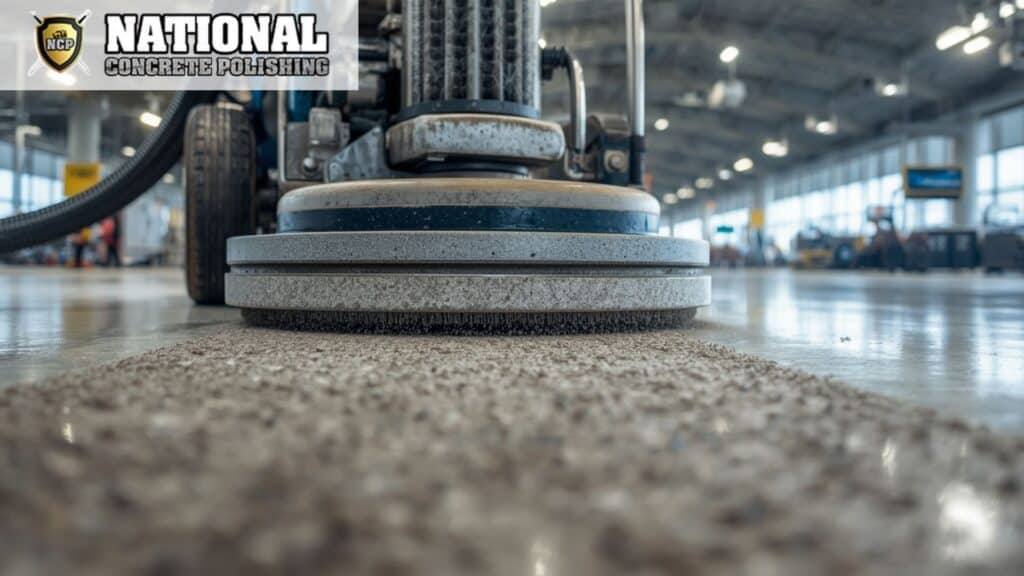
Chemical densification plays a crucial role in creating the exceptional durability required for airport and transportation hub applications. Specialized hardening agents penetrate deep into the concrete matrix, filling microscopic pores and creating a surface that becomes increasingly resistant to wear, impact, and abrasion. This chemical enhancement is particularly important in South Florida’s climate, where humidity and temperature variations can affect traditional concrete surfaces.
The polishing process creates a surface that is fundamentally different from coated floors. Rather than applying a topical treatment that can wear away or delaminate under heavy traffic, polished concrete achieves its properties through mechanical and chemical modification of the concrete itself. This approach ensures that the performance characteristics remain consistent throughout the surface depth, providing long-lasting results even under extreme use conditions.
Modern polishing equipment and techniques allow for precise control over the final surface characteristics. Contractors can achieve specific levels of aggregate exposure, slip resistance, and gloss levels to meet the exact requirements of different transportation hub zones. High-traffic walkways might require different specifications than retail areas or gate waiting zones, and polished concrete technology can accommodate these varying needs within a single facility.
Climate Considerations for South Florida Transportation Hubs
South Florida’s subtropical climate presents unique challenges that make polished concrete an ideal choice for transportation infrastructure. The region’s high humidity levels, frequent thunderstorms, and temperature fluctuations create conditions where traditional flooring materials often fail prematurely. Understanding how polished concrete responds to these environmental factors is crucial for facility managers and architects planning transportation hub projects.
Humidity control is a constant concern in South Florida transportation facilities. Passengers arriving from air-conditioned aircraft or vehicles into the humid outdoor environment create condensation challenges that can make floors slippery and dangerous. Polished concrete’s non-porous surface prevents moisture absorption while maintaining appropriate slip resistance, even when surface moisture is present. This characteristic is particularly valuable in areas near entrances and exits where humidity transitions are most pronounced.
The thermal mass properties of polished concrete contribute significantly to energy efficiency in large transportation facilities. Concrete’s ability to absorb and slowly release thermal energy helps moderate indoor temperatures, reducing the load on HVAC systems. In South Florida’s climate, where cooling costs represent a major operational expense, this thermal regulation can result in substantial energy savings over the facility’s lifespan.
Hurricane and severe weather preparedness is another critical consideration for South Florida transportation hubs. Polished concrete’s resistance to water damage makes it an excellent choice for facilities that may experience flooding or water intrusion during extreme weather events. Unlike carpeting or other porous materials that can harbor mold and bacteria after water exposure, polished concrete can be quickly cleaned and returned to service following weather-related incidents.
The reflective properties of polished concrete also contribute to improved lighting efficiency in transportation facilities. South Florida’s abundant natural light can be maximized through strategic use of polished concrete surfaces that reflect and distribute illumination throughout interior spaces. This light enhancement reduces artificial lighting requirements during daylight hours, contributing to overall energy efficiency and creating a more pleasant environment for passengers.
Safety and Performance Standards for High-Traffic Areas
Transportation hub safety requirements go far beyond basic building codes, encompassing federal aviation regulations, ADA compliance, and industry-specific performance standards. Polished concrete installations in these environments must meet stringent criteria for slip resistance, fire safety, chemical resistance, and durability while maintaining the aesthetic qualities that enhance the passenger experience.

Slip resistance testing and certification are mandatory for airport and transportation hub flooring installations. Modern polishing techniques can achieve optimal slip resistance values through controlled surface texturing and specialized finishing processes. The ability to customize slip resistance characteristics for different zones within a facility allows designers to optimize safety without compromising appearance. High-traffic walkways, food service areas, and outdoor-adjacent zones each have specific requirements that polished concrete can accommodate.
Impact resistance is another critical performance characteristic for transportation hub flooring. Heavy luggage, equipment carts, and maintenance vehicles create impact loads that would damage traditional flooring materials. Polished concrete’s exceptional impact resistance ensures that surfaces maintain their integrity and appearance even under extreme use conditions. This durability is particularly important in baggage handling areas, loading zones, and maintenance corridors where heavy equipment operation is routine.
Chemical resistance requirements in transportation facilities include resistance to de-icing compounds, cleaning chemicals, fuel spills, and various substances that passengers might accidentally spill. Polished concrete’s dense, non-porous surface provides excellent chemical resistance, preventing staining and damage that could compromise both appearance and hygiene. This resistance is especially valuable in South Florida, where frequent cleaning and disinfection protocols are necessary due to high passenger volumes and humid conditions.
Fire safety considerations for transportation hub flooring include flame spread ratings, smoke development characteristics, and emergency egress requirements. Polished concrete naturally meets or exceeds fire safety requirements without the need for additional treatments or coatings. This inherent fire resistance provides peace of mind for facility managers and contributes to overall building safety systems. The non-combustible nature of polished concrete also supports emergency response procedures and evacuation protocols.
Design Integration and Aesthetic Considerations
Modern transportation hubs serve as more than functional facilities; they represent gateways to destinations and create lasting impressions for millions of travelers. The aesthetic integration of polished concrete flooring must balance practical performance requirements with design elements that enhance the passenger experience and reflect the facility’s architectural vision. Successful integration requires careful consideration of color, texture, pattern, and decorative elements that complement the overall design scheme.
Color integration in polished concrete can be achieved through various techniques, including integral coloring, acid staining, and dye applications. These methods allow designers to create flooring that coordinates with terminal branding, wayfinding systems, and architectural elements. In South Florida transportation hubs, colors that reflect the region’s coastal environment and vibrant culture can create a sense of place while maintaining the professional appearance required for these facilities.
Decorative aggregates and exposed aggregate techniques can add visual interest and texture to polished concrete surfaces. Local materials such as coral, shell, or recycled glass can be incorporated to create unique designs that celebrate regional identity. These decorative elements must be carefully selected and installed to ensure they do not compromise the performance characteristics required for high-traffic applications.
Zone differentiation through flooring design helps passengers navigate complex transportation facilities while creating visual interest. Different areas of an airport or transit hub can be distinguished through variations in concrete finish, color, or pattern while maintaining the durability and performance benefits of polished concrete throughout. This approach supports wayfinding initiatives and can reduce passenger stress by creating clear visual cues for navigation.
Logo and graphic integration capabilities make polished concrete an excellent choice for branding applications in transportation hubs. Facility logos, directional indicators, and decorative patterns can be incorporated directly into the flooring surface through various techniques including sawcut patterns, inlays, and staining. These integrated graphics become permanent parts of the floor surface, eliminating the maintenance and replacement issues associated with applied graphics or signage.
Maintenance and Lifecycle Management
The operational demands of transportation hubs require flooring solutions that can maintain their appearance and performance with minimal maintenance intervention. Polished concrete’s low-maintenance characteristics make it particularly well-suited for facilities that operate 24/7 and cannot afford extended downtime for floor maintenance or replacement. Understanding the maintenance requirements and lifecycle expectations helps facility managers make informed decisions about flooring investments.
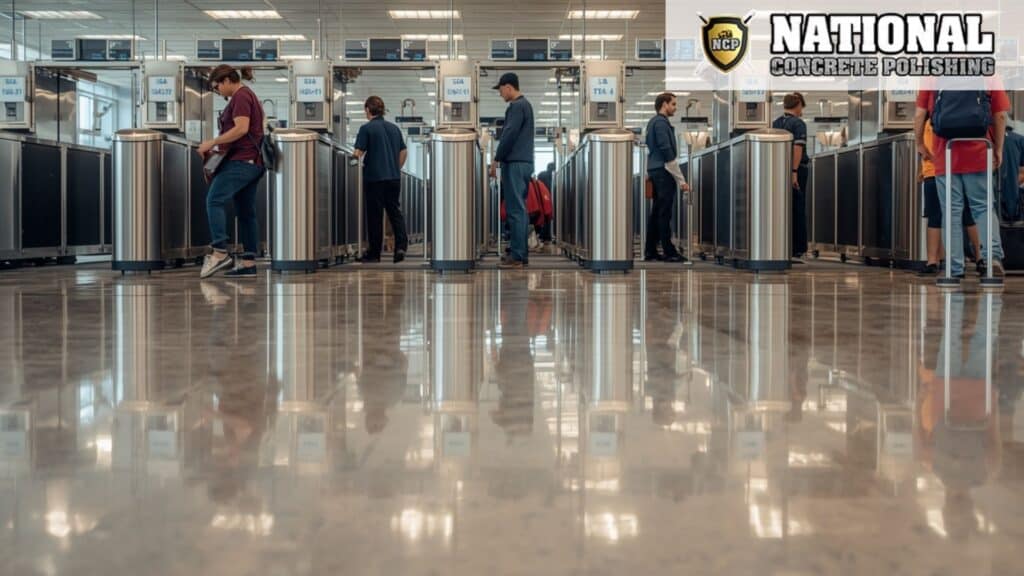
Daily maintenance procedures for polished concrete in transportation environments typically involve dust mopping and periodic damp mopping with neutral pH cleaners. The non-porous surface prevents dirt and contaminants from penetrating the floor, making cleaning more effective and efficient. This ease of maintenance is particularly valuable in high-traffic areas where traditional cleaning methods might be insufficient to maintain hygiene standards.
Periodic maintenance requirements for polished concrete are minimal compared to other flooring options. Depending on traffic levels and usage patterns, facilities may need burnishing or light re-polishing every few years to maintain optimal appearance. These maintenance procedures can typically be performed during off-peak hours with minimal disruption to operations, an important consideration for transportation facilities that must maintain continuous service.
Lifecycle cost analysis demonstrates the superior value proposition of polished concrete for transportation applications. While initial installation costs may be comparable to other premium flooring options, the extended service life and reduced maintenance requirements result in significantly lower total cost of ownership. Many polished concrete installations in transportation facilities have service lives exceeding 20 years with proper maintenance, far surpassing traditional flooring materials.
Sustainability considerations throughout the lifecycle include the use of existing concrete substrates, minimal material waste, and the absence of volatile organic compounds (VOCs) in the finished surface. These characteristics support green building initiatives and contribute to LEED certification goals common in modern transportation infrastructure projects. The long service life of polished concrete also reduces the environmental impact associated with frequent floor replacement and disposal.
National Concrete Polishing brings extensive experience in transportation hub flooring projects throughout South Florida. Their expertise in managing complex installations while maintaining operational continuity makes them an ideal partner for airports, transit authorities, and transportation facility managers seeking reliable, high-performance flooring solutions. The company’s understanding of the unique requirements and challenges associated with transportation infrastructure ensures successful project outcomes that meet both performance and aesthetic objectives.
Frequently Asked Questions
How long does polished concrete installation take in an active airport or transportation hub?
Installation timelines vary depending on the project scope and operational constraints, but most transportation hub projects can be completed in phases to minimize disruption. Typical installation rates range from 1,000 to 3,000 square feet per day, depending on the existing concrete condition and desired finish level. Projects are usually scheduled during off-peak hours or planned around operational requirements to maintain facility functionality.
Can polished concrete achieve the slip resistance required for airport safety standards?
Yes, modern polishing techniques can achieve specific slip resistance values required by aviation authorities and building codes. Surface texturing and controlled finishing processes allow contractors to optimize slip resistance for different zones within the facility while maintaining the aesthetic qualities of polished concrete.
How does polished concrete perform in South Florida’s humid climate?
Polished concrete excels in humid conditions due to its non-porous surface that resists moisture absorption. The material’s thermal mass properties help moderate indoor temperatures, and its resistance to mold and bacteria growth makes it ideal for South Florida’s subtropical climate.
What maintenance is required to keep polished concrete looking its best in high-traffic areas?
Daily maintenance involves dust mopping and periodic cleaning with neutral pH cleaners. Depending on traffic levels, facilities may need light re-polishing every 3-5 years to maintain optimal appearance. The low-maintenance requirements make it ideal for 24/7 operations.
Can existing concrete in older transportation facilities be polished?
Most existing concrete can be successfully polished, though the condition and age of the substrate affect the final results. Professional assessment can determine the feasibility and any necessary preparation work required for optimal outcomes.
How does the cost of polished concrete compare to other airport flooring options?
While initial installation costs may be comparable to other premium options, polished concrete delivers superior lifecycle value through reduced maintenance costs and extended service life, often exceeding 20 years in transportation applications.
Is polished concrete suitable for outdoor areas of transportation hubs?
Polished concrete can be used in covered outdoor areas, but fully exposed exterior applications require special considerations for weather protection and UV resistance. Covered walkways, canopies, and semi-enclosed areas are excellent applications for polished concrete.
How quickly can polished concrete be returned to service after installation?
Polished concrete can typically handle foot traffic within hours of completion, with full service capability available within 24 hours. This rapid return to service is crucial for transportation facilities that cannot afford extended closures.
Conclusion
The demanding environment of South Florida transportation hubs requires flooring solutions that deliver exceptional performance, durability, and aesthetic appeal while managing the unique challenges of subtropical climate conditions and extreme traffic volumes. Polished concrete has proven itself as the optimal choice for these applications, providing unmatched durability, cost-effectiveness, and design flexibility that traditional flooring materials simply cannot match.
The combination of superior moisture resistance, thermal stability, and low maintenance requirements makes concrete polishing South Florida airport facilities and other transportation infrastructure an investment in long-term operational efficiency. Facility managers who choose polished concrete benefit from reduced lifecycle costs, improved safety performance, and enhanced passenger experiences that contribute to the overall success of their operations.
As South Florida continues to grow as a major transportation hub connecting the Americas, the importance of reliable, high-performance infrastructure becomes increasingly critical. Polished concrete flooring represents a proven solution that meets the demanding requirements of modern transportation facilities while supporting sustainability goals and budget optimization objectives.
The expertise and experience of qualified contractors like National Concrete Polishing ensure that transportation hub projects achieve their performance and aesthetic goals while maintaining operational continuity throughout the installation process. For facility managers, architects, and transportation authorities planning flooring projects, polished concrete offers a comprehensive solution that addresses both immediate needs and long-term operational requirements in South Florida’s challenging environment.
source https://nationalconcretepolishing.net/concrete-polishing-south-florida-airport/


No comments:
Post a Comment