Laboratory environments in Fort Lauderdale demand the highest standards of cleanliness, durability, and chemical resistance when it comes to flooring solutions. The unique challenges faced by research facilities, pharmaceutical labs, and cleanroom environments require specialized epoxy flooring systems that go far beyond standard commercial applications. From biotechnology startups in downtown Fort Lauderdale to established pharmaceutical research centers, the need for reliable laboratory epoxy flooring has never been more critical.
The South Florida climate presents additional considerations for laboratory flooring installations. High humidity levels, temperature fluctuations, and the constant need for rigorous cleaning protocols create a demanding environment that only premium epoxy flooring Fort Lauderdale laboratory solutions can withstand. These specialized flooring systems must maintain their integrity while supporting sensitive equipment, protecting against chemical spills, and providing a sterile environment for critical research activities.
Modern laboratory operations require flooring that seamlessly integrates with sophisticated ventilation systems, accommodates heavy equipment loads, and supports the stringent regulatory requirements that govern pharmaceutical and research facilities. The investment in proper laboratory epoxy flooring represents a crucial foundation for operational success, affecting everything from equipment performance to regulatory compliance and worker safety.
National Concrete Polishing has established itself as a leader in providing comprehensive flooring solutions for Fort Lauderdale’s growing laboratory and research sector. Understanding the unique requirements of each laboratory environment, from basic research facilities to advanced cleanroom applications, ensures that every installation meets or exceeds industry standards while providing long-term value and performance reliability.
Key Takeaways
Chemical Resistance Excellence: Laboratory epoxy flooring systems provide superior resistance to acids, bases, solvents, and other aggressive chemicals commonly used in research environments, protecting the underlying concrete and ensuring long-term durability.
Seamless Surface Design: Properly installed epoxy flooring Fort Lauderdale laboratory applications create completely seamless surfaces that eliminate cracks, joints, and crevices where contaminants could accumulate, supporting stringent cleanliness requirements.
Static Control Integration: Advanced epoxy formulations can incorporate static dissipative properties essential for electronics-sensitive research environments and explosive material handling areas.
Regulatory Compliance Support: Professional laboratory epoxy flooring installations help facilities meet FDA, EPA, and other regulatory requirements for pharmaceutical and research operations.
Temperature and Humidity Stability: Specialized epoxy systems maintain structural integrity and performance characteristics despite Fort Lauderdale’s challenging climate conditions and laboratory temperature variations.
Rapid Installation and Curing: Modern epoxy technologies allow for faster installation schedules with minimal disruption to ongoing laboratory operations, crucial for maintaining research continuity.
Long-term Cost Effectiveness: While initial investment may be higher than standard flooring, laboratory-grade epoxy systems provide decades of reliable service with minimal maintenance requirements.
Customizable Performance Features: Epoxy formulations can be tailored to specific laboratory needs, including slip resistance, impact resistance, and specialized chemical compatibility requirements.
Understanding Laboratory Epoxy Flooring Requirements
Laboratory environments present unique challenges that distinguish them from typical commercial or industrial flooring applications. The combination of chemical exposure, stringent cleanliness requirements, and specialized equipment demands creates a complex set of performance criteria that only properly designed epoxy flooring systems can meet. Understanding these requirements forms the foundation for successful laboratory flooring projects in Fort Lauderdale’s diverse research community.
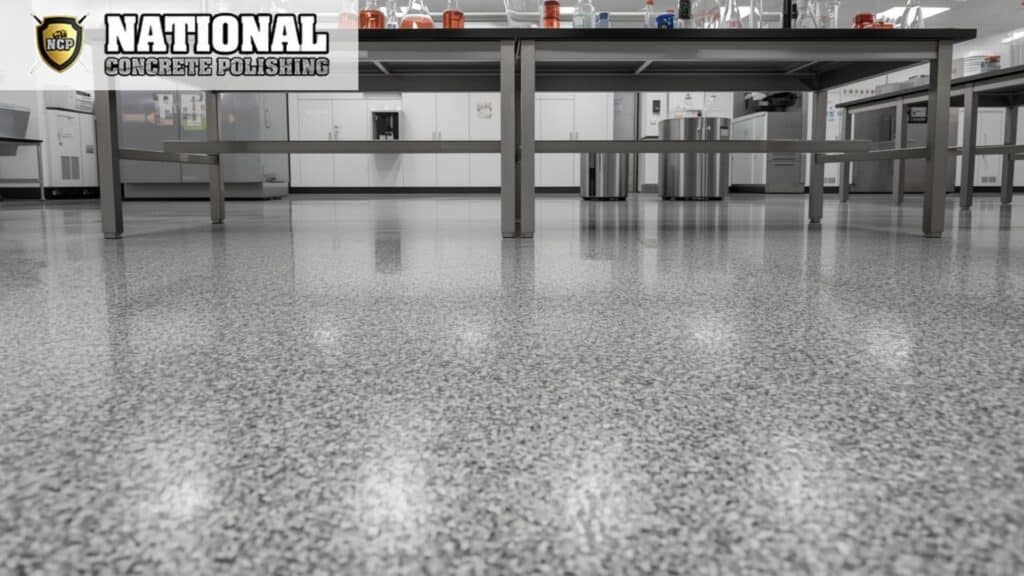
Chemical compatibility represents perhaps the most critical consideration in laboratory epoxy flooring selection. Research facilities routinely handle acids ranging from mild acetic acid to concentrated sulfuric acid, organic solvents including methylene chloride and acetone, and specialized reagents that can aggressively attack inadequate flooring materials. The epoxy resin chemistry, curing agent selection, and aggregate composition must all be carefully matched to the specific chemical exposure profile of each laboratory space.
Cleanability requirements in laboratory environments far exceed those of typical commercial spaces. The ability to achieve and maintain sterile conditions depends heavily on flooring surfaces that can withstand repeated exposure to disinfectants, steam cleaning, and aggressive cleaning protocols without degradation. Seamless epoxy installations eliminate the joints and seams that can harbor contaminants, while the non-porous surface prevents absorption of spills and cleaning solutions.
Equipment compatibility considerations include both the static and dynamic loads imposed by laboratory equipment. Heavy analytical instruments, fume hoods, and specialized research apparatus create concentrated point loads that the flooring system must support without cracking or deformation. Additionally, vibration-sensitive equipment may require epoxy systems with specific damping characteristics to maintain measurement accuracy.
Chemical Resistance and Safety Considerations
The chemical resistance properties of laboratory epoxy flooring systems represent the primary defense against costly damage and safety hazards in research environments. Fort Lauderdale laboratories working with diverse chemical inventories require flooring solutions that can withstand both routine exposures and accidental spills without compromising structural integrity or creating safety risks for personnel.
Acid resistance testing forms a cornerstone of laboratory epoxy flooring evaluation. Different epoxy formulations demonstrate varying levels of resistance to common laboratory acids, with novolac epoxy systems typically providing superior performance against concentrated acids compared to standard bisphenol-A formulations. The selection process must consider not only the types of acids present but also their concentrations, exposure temperatures, and contact duration under both normal and emergency conditions.
Solvent resistance becomes particularly critical in organic chemistry laboratories and pharmaceutical research facilities. Many common solvents can cause swelling, softening, or complete dissolution of inadequate epoxy systems, leading to floor failure and potential safety hazards. Advanced laboratory epoxy flooring incorporates specialized resin technologies and cross-linking agents that maintain dimensional stability and surface integrity even under prolonged solvent exposure.
Thermal shock resistance addresses the challenges posed by equipment that generates significant heat or requires cryogenic materials. Laboratory epoxy flooring Fort Lauderdale installations must accommodate temperature cycling from liquid nitrogen temperatures to autoclave conditions without developing cracks or delamination. This capability requires careful attention to thermal expansion coefficients and the use of flexible intermediate layers in some applications.
Safety considerations extend beyond chemical resistance to include slip resistance, static control, and emergency response capabilities. Textured epoxy surfaces can provide necessary slip resistance for wet laboratory conditions while maintaining cleanability. Static dissipative formulations protect sensitive electronic equipment and prevent ignition hazards in laboratories handling flammable materials. Emergency response planning must consider how spilled chemicals will interact with the flooring system and whether specialized neutralization procedures are required.
Installation Process and Quality Control
The installation process for laboratory epoxy flooring requires meticulous attention to detail and adherence to stringent quality control protocols that ensure long-term performance in demanding research environments. Unlike standard commercial epoxy applications, laboratory installations must meet precise specifications for surface preparation, material mixing, application techniques, and curing conditions that directly impact the final performance characteristics.

Surface preparation represents the critical foundation for successful laboratory epoxy flooring installations. Concrete substrates must be evaluated for moisture content, pH levels, and structural integrity before any epoxy application begins. Mechanical preparation techniques, including diamond grinding and shot blasting, create the surface profile necessary for optimal adhesion while removing any existing coatings, curing compounds, or contaminants that could compromise bond strength.
Moisture testing becomes particularly important in Fort Lauderdale’s humid climate, where concrete slabs can retain significant moisture even in climate-controlled laboratory environments. Calcium chloride testing, relative humidity probes, and plastic sheet testing provide comprehensive moisture evaluation to prevent future delamination issues. When elevated moisture levels are detected, specialized primer systems or moisture mitigation techniques may be required before epoxy application.
Material mixing and application protocols for laboratory epoxy flooring demand precision that exceeds standard industrial applications. Multi-component epoxy systems require exact mixing ratios, thorough blending procedures, and careful attention to pot life limitations. Temperature and humidity conditions during application affect curing characteristics and final properties, necessitating environmental monitoring and control throughout the installation process.
Quality control testing during installation includes gel time verification, thickness measurements, and surface profile documentation. Advanced laboratory installations may require additional testing such as pull-off adhesion testing, chemical resistance spot testing, and surface cleanliness verification using specialized measurement equipment. These quality control measures ensure that the installed system will meet the demanding performance requirements of laboratory environments.
Curing and post-installation procedures require careful management to achieve optimal performance characteristics. Temperature control, ventilation management, and protection from contamination during the curing period directly affect the final chemical resistance, mechanical properties, and surface characteristics of the laboratory epoxy flooring system.
Maintenance and Longevity Strategies
Proper maintenance protocols significantly extend the service life of laboratory epoxy flooring while ensuring continued compliance with cleanliness and safety requirements. Fort Lauderdale laboratories benefit from maintenance strategies that account for the unique challenges posed by chemical exposures, intensive cleaning requirements, and the need to minimize operational disruptions during maintenance activities.
Daily cleaning procedures for laboratory epoxy flooring must balance effectiveness against potential damage from aggressive cleaning chemicals. While epoxy surfaces can withstand most laboratory disinfectants and cleaning agents, repeated exposure to highly alkaline cleaners or abrasive cleaning methods can gradually degrade surface properties. Establishing cleaning protocols that specify appropriate products, concentrations, and application methods helps preserve the flooring investment while maintaining required cleanliness standards.
Spill response procedures represent a critical component of laboratory epoxy flooring maintenance. Immediate response to chemical spills prevents prolonged exposure that could exceed the resistance capabilities of even the most robust epoxy systems. Training laboratory personnel on proper spill cleanup techniques, including neutralization procedures and appropriate cleaning materials, minimizes the potential for flooring damage while ensuring personnel safety.
Periodic inspection and assessment programs help identify potential issues before they develop into major problems. Visual inspections can detect early signs of chemical attack, mechanical damage, or wear patterns that might require attention. More detailed assessments using adhesion testing, chemical resistance evaluation, and surface analysis provide comprehensive information about flooring condition and remaining service life.
Preventive maintenance strategies include reapplication of protective topcoats, repair of minor damage, and updating of surface treatments to address changing laboratory requirements. Modern laboratory epoxy flooring systems often incorporate sacrificial topcoats that can be renewed without complete floor replacement, providing cost-effective maintenance options that extend overall system life.
Documentation and record-keeping support both maintenance planning and regulatory compliance requirements. Maintaining detailed records of cleaning procedures, spill incidents, maintenance activities, and inspection results provides valuable data for optimizing maintenance strategies and demonstrating compliance with regulatory requirements that may apply to specific laboratory operations.
Regulatory Compliance and Industry Standards
Laboratory epoxy flooring installations in Fort Lauderdale must navigate a complex landscape of regulatory requirements and industry standards that govern everything from pharmaceutical manufacturing to research laboratory operations. Understanding and implementing these requirements ensures not only regulatory compliance but also optimal performance and safety in laboratory environments.

FDA regulations for pharmaceutical facilities establish specific requirements for flooring in areas where drug products are manufactured, processed, or stored. These regulations mandate surfaces that are smooth, impervious, and easily cleanable, with particular attention to preventing contamination and supporting effective cleaning and sanitization procedures. Laboratory epoxy flooring systems must demonstrate compliance through appropriate documentation and testing protocols.
Good Manufacturing Practice (GMP) guidelines provide detailed requirements for pharmaceutical and biotechnology facilities that directly impact flooring selection and installation. These guidelines emphasize the importance of surfaces that do not shed particles, can withstand repeated cleaning and disinfection, and maintain their properties throughout their service life. Compliance documentation must demonstrate that the epoxy flooring system meets these stringent requirements.
Environmental Protection Agency (EPA) regulations may apply to laboratories handling hazardous materials, requiring flooring systems that can contain spills and prevent environmental contamination. Secondary containment requirements, chemical compatibility documentation, and emergency response capabilities become critical considerations in the design and installation of laboratory epoxy flooring systems.
Industry-specific standards such as those developed by the International Society for Pharmaceutical Engineering (ISPE) and the American Society for Testing and Materials (ASTM) provide detailed technical requirements for laboratory flooring systems. These standards address testing methods, performance criteria, and installation procedures that ensure consistent quality and performance across different laboratory applications.
Local building codes and fire safety regulations in Fort Lauderdale may impose additional requirements related to flame spread ratings, smoke generation, and emergency egress considerations. Coordination with local authorities and building officials ensures that laboratory epoxy flooring installations comply with all applicable local requirements while meeting the specialized needs of laboratory environments.
National Concrete Polishing maintains comprehensive knowledge of regulatory requirements affecting laboratory flooring installations, ensuring that all projects meet or exceed applicable standards while providing optimal performance for specific laboratory applications. This expertise helps clients navigate complex regulatory landscapes while achieving their operational objectives.
Frequently Asked Questions
What makes laboratory epoxy flooring different from standard commercial epoxy flooring?
Laboratory epoxy flooring incorporates specialized resin chemistries, enhanced chemical resistance properties, and stricter quality control measures to meet the demanding requirements of research environments. These systems typically feature superior resistance to acids, solvents, and cleaning chemicals, along with seamless installation techniques that eliminate contamination harboring points.
How long does laboratory epoxy flooring installation typically take?
Installation timelines vary based on project size and complexity, but most laboratory epoxy flooring projects require 3-7 days from surface preparation through final curing. Factors affecting timeline include surface condition, environmental controls, and specific performance requirements that may necessitate multiple coating layers or specialized preparation techniques.
Can laboratory epoxy flooring be installed in occupied buildings?
Yes, with proper planning and coordination, laboratory epoxy flooring can be installed in occupied facilities. Low-odor formulations, phased installation schedules, and temporary containment measures help minimize disruption to ongoing laboratory operations while ensuring proper installation conditions.
What maintenance is required for laboratory epoxy flooring?
Routine maintenance includes daily cleaning with appropriate disinfectants, immediate spill cleanup, and periodic inspection for signs of wear or damage. Most laboratory epoxy flooring systems require minimal maintenance beyond normal cleaning protocols, with topcoat renewal typically needed every 5-10 years depending on usage intensity.
How does Fort Lauderdale’s climate affect laboratory epoxy flooring performance?
High humidity and temperature fluctuations in South Florida require careful attention to moisture control during installation and may necessitate specialized primer systems or environmental controls. Properly installed laboratory epoxy flooring performs excellently in Fort Lauderdale’s climate when appropriate installation procedures are followed.
What chemical resistance testing should be performed before installation?
Chemical resistance testing should evaluate all chemicals routinely used in the laboratory, including acids, bases, solvents, and cleaning agents. Testing protocols typically include immersion testing, spot testing, and accelerated aging studies to ensure long-term compatibility with the laboratory’s chemical inventory.
Can existing laboratory flooring be covered with epoxy systems?
Existing flooring can often be covered with epoxy systems, but thorough evaluation of the substrate condition, adhesion testing, and compatibility assessment are essential. Factors such as existing coating type, surface condition, and contamination levels determine whether direct application or substrate preparation is required.
What warranty coverage is available for laboratory epoxy flooring?
Warranty coverage varies based on specific products and installation conditions, but typically includes material defects and installation workmanship for periods ranging from 1-5 years. Extended warranties may be available for specific applications, with coverage terms dependent on maintenance compliance and usage conditions.
Conclusion
Laboratory epoxy flooring represents a critical infrastructure investment for Fort Lauderdale’s growing research and pharmaceutical sectors. The unique combination of chemical resistance, cleanability, and durability provided by properly designed and installed epoxy systems creates the foundation for successful laboratory operations while supporting regulatory compliance and long-term cost effectiveness.
The selection and installation of appropriate laboratory epoxy flooring requires expertise in understanding the complex interplay between chemical exposures, environmental conditions, and operational requirements that characterize modern research facilities. From biotechnology startups to established pharmaceutical manufacturers, the investment in quality flooring systems pays dividends through reduced maintenance costs, improved operational efficiency, and enhanced safety performance.
National Concrete Polishing brings extensive experience in laboratory flooring applications to Fort Lauderdale’s research community, combining technical expertise with practical understanding of the challenges faced by laboratory operators. This comprehensive approach ensures that each installation meets the specific requirements of its intended application while providing the reliability and performance that laboratory environments demand.
The future of laboratory operations increasingly depends on infrastructure that can adapt to evolving research needs while maintaining the highest standards of safety and performance. Quality laboratory epoxy flooring provides this adaptability, supporting current operations while offering the flexibility to accommodate future changes in research focus, equipment requirements, and regulatory standards that will shape the next generation of laboratory facilities in Fort Lauderdale.
source https://nationalconcretepolishing.net/epoxy-flooring-fort-lauderdale-laboratory/


No comments:
Post a Comment