Concrete countertops have emerged as one of the most sought-after design elements in modern Florida homes, offering homeowners a perfect blend of durability, customization, and contemporary aesthetics. The popularity of concrete surfaces has skyrocketed in recent years, particularly as homeowners seek alternatives to traditional materials like granite or marble that can better withstand Florida’s unique climate challenges while providing endless design possibilities.
One of the most critical aspects of concrete countertop design that often gets overlooked is the edge profile. The edge design you choose can dramatically transform the entire look and feel of your kitchen or bathroom, serving as both a functional element and a striking design feature. From sleek, minimalist lines that complement modern architectural styles to more elaborate decorative profiles that add visual interest and sophistication, the right concrete countertop edge profiles can elevate your space from ordinary to extraordinary.
Florida’s diverse architectural landscape, ranging from contemporary waterfront properties to Mediterranean-inspired estates, provides the perfect backdrop for experimenting with various concrete countertop edge designs. The versatility of concrete allows for custom edge profiles that can be tailored to match any design aesthetic, whether you’re aiming for a clean, industrial look or a more refined, traditional appearance.
The choice of edge profile isn’t merely aesthetic – it also impacts functionality, maintenance requirements, and long-term durability. Different edge designs offer varying levels of chip resistance, ease of cleaning, and safety considerations, making it essential to understand the practical implications of each option. Additionally, certain edge profiles work better with specific concrete finishes and surface treatments, requiring careful coordination during the design and installation process.
As concrete technology continues to advance, new techniques and tools have made it possible to create increasingly sophisticated edge profiles that were once only achievable with natural stone. Modern concrete artisans can now craft intricate details, smooth curves, and precise angles that rival any traditional countertop material while offering superior customization options and cost-effectiveness.
Key Takeaways
- Edge Profile Impact: The concrete countertop edge design significantly influences both the aesthetic appeal and functional performance of your countertops, making it one of the most important design decisions in your project.
- Climate Considerations: Florida’s humid climate and temperature fluctuations require specific edge profiles that minimize water infiltration and thermal stress, ensuring long-term durability and performance.
- Customization Options: Unlike natural stone, concrete offers unlimited customization possibilities for edge profiles, allowing homeowners to create unique designs that perfectly match their personal style and home architecture.
- Maintenance Requirements: Different edge profiles have varying maintenance needs, with some designs requiring more frequent sealing and cleaning than others, particularly in high-use areas like kitchen islands.
- Safety Features: Certain edge profiles provide better safety characteristics, especially important in homes with children or elderly residents, with rounded edges generally offering superior safety compared to sharp, angular designs.
- Cost Implications: More complex edge profiles typically require additional labor and specialized tools, impacting the overall project cost, though the investment often pays off in increased home value and aesthetic appeal.
- Integration with Design: Successful edge profile selection requires consideration of the overall design theme, cabinet styles, and architectural elements to create a cohesive and harmonious appearance throughout the space.
- Professional Installation: Achieving high-quality concrete countertop edge profiles requires skilled craftsmanship and specialized equipment, making professional installation essential for optimal results and long-term satisfaction.
Understanding Concrete Countertop Edge Fundamentals
The foundation of any successful concrete countertop project lies in understanding the fundamental principles behind edge design and execution. Concrete countertop edge profiles serve multiple purposes beyond mere aesthetics, functioning as critical structural elements that protect the countertop from damage while providing safe, comfortable surfaces for daily use.
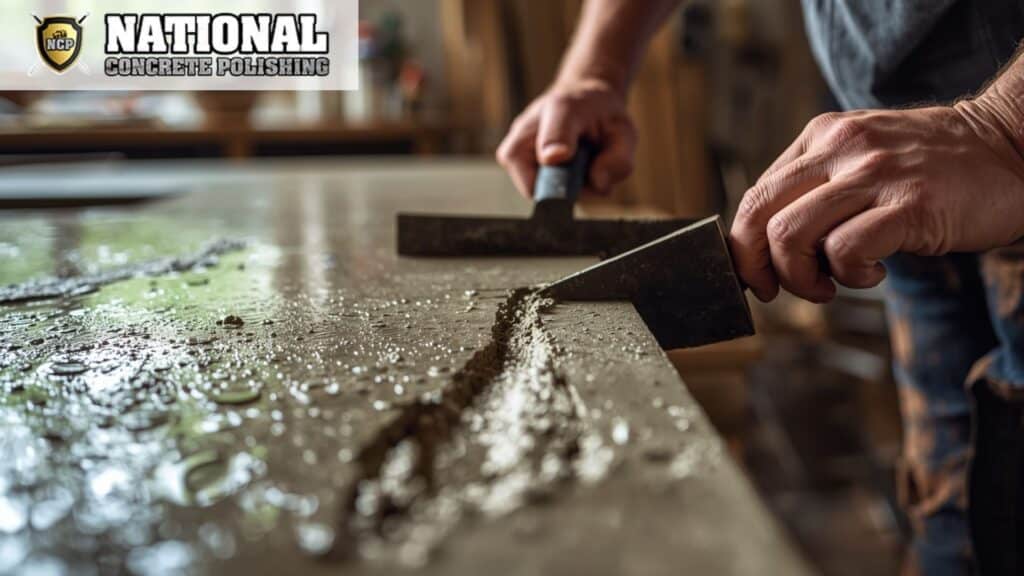
The process of creating concrete countertop edges begins during the initial forming stage, where skilled craftsmen use specialized tools and techniques to shape the concrete while it’s still workable. Unlike post-installation edge treatments used with natural stone, concrete edges are typically formed during the casting process, allowing for greater design flexibility and structural integrity. This approach enables the creation of complex curves, intricate details, and seamless transitions that would be impossible or extremely costly with other materials.
Material composition plays a crucial role in edge profile success, with the concrete mix design specifically formulated to provide the necessary workability, strength, and finish quality. High-performance concrete mixes often incorporate specialized aggregates, admixtures, and reinforcement materials that enhance the concrete’s ability to hold fine details and resist edge damage over time. The curing process is equally important, with proper temperature and moisture control ensuring that edges develop their full strength and durability characteristics.
Florida’s environmental conditions present unique challenges for concrete countertop edge designs, particularly regarding thermal expansion and contraction cycles. The state’s high humidity levels and temperature variations require careful consideration of edge profile geometry to minimize stress concentrations and prevent cracking. Additionally, the prevalence of hurricanes and severe weather events makes it essential to choose edge designs that can withstand potential impact damage and maintain their integrity under extreme conditions.
Popular Straight and Angular Edge Profiles
Straight and angular edge profiles represent the most popular category of concrete countertop edge designs in modern Florida homes, offering clean lines and contemporary aesthetics that complement today’s architectural trends. These profiles range from simple square edges to more sophisticated beveled and chamfered designs, each providing distinct visual and functional characteristics that appeal to different design preferences.
The square edge profile stands as the most minimalist option, featuring a clean, 90-degree angle that creates a sharp, modern appearance. This design works exceptionally well in contemporary and industrial-style kitchens, providing an uncompromising geometric aesthetic that emphasizes the raw beauty of concrete. However, square edges require careful consideration regarding safety and maintenance, as the sharp corners can be prone to chipping and may pose safety concerns in high-traffic areas. Proper reinforcement and high-quality concrete mixes are essential for maintaining the integrity of square edges over time.
Beveled edges offer a sophisticated alternative that combines the clean lines of angular design with improved functionality and safety. These profiles feature angled cuts that create visual interest while reducing the risk of chipping and providing more comfortable contact surfaces. The bevel angle can be customized to achieve different aesthetic effects, with subtle 15-degree bevels providing understated elegance and more pronounced 45-degree bevels creating dramatic shadow lines that enhance the countertop’s visual depth.
Chamfered edges represent another popular angular option, featuring small angled cuts along the top and bottom edges of the countertop. This design provides the visual appeal of a square edge while eliminating the sharp corners that can be problematic in daily use. Chamfered edges are particularly popular in Florida homes with traditional or transitional design themes, as they offer a refined appearance that bridges the gap between contemporary and classic aesthetics.
The double bevel edge profile has gained significant popularity in high-end Florida residences, featuring symmetrical angled cuts on both the top and bottom of the countertop edge. This design creates a sophisticated, jewelry-like appearance that adds visual weight and presence to the countertop while maintaining the clean lines that characterize modern design. Double bevels work particularly well with thicker countertop profiles, where the additional material thickness allows for more pronounced angular details.
Curved and Rounded Edge Designs
Curved and rounded edge profiles have become increasingly popular in Florida homes, offering superior safety characteristics and timeless aesthetic appeal that complements both traditional and contemporary design schemes. These organic edge designs provide a softer, more approachable feel compared to angular profiles while offering practical advantages in terms of maintenance and durability.

The bullnose edge represents the most classic rounded profile, featuring a smooth, quarter-circle curve that creates a pillowy, comfortable edge perfect for casual dining and food preparation areas. This design has particular appeal in Florida family homes, where the rounded edges provide enhanced safety for children while creating a welcoming, approachable aesthetic. The bullnose profile also offers excellent resistance to chipping and impact damage, as the curved geometry distributes stress more evenly than sharp corners.
Half bullnose edges provide a compromise between rounded and straight designs, featuring a curved top edge with a straight vertical face. This profile offers many of the safety and durability benefits of a full bullnose while maintaining a more contemporary appearance that works well with modern cabinet styles. The half bullnose design is particularly effective in kitchens where the countertop extends beyond the cabinet face, creating a comfortable overhang for seating areas.
The ogee edge profile brings traditional elegance to concrete countertops, featuring an S-shaped curve that creates sophisticated shadow lines and visual interest. This classical design works exceptionally well in Mediterranean-style Florida homes and traditional kitchen designs, providing a level of refinement typically associated with natural stone materials. Creating ogee profiles in concrete requires advanced forming techniques and skilled craftsmanship, but the results can be stunning when executed properly.
Waterfall edges have emerged as a dramatic design trend in luxury Florida homes, extending the countertop material vertically down the sides of kitchen islands or peninsulas. While technically not an edge profile in the traditional sense, waterfall designs create stunning visual continuity and showcase the beauty of concrete’s natural variations and patterns. These designs work particularly well with book-matched concrete slabs that create mirror-image patterns across the horizontal and vertical surfaces.
Custom curved profiles offer unlimited design possibilities, allowing homeowners to create unique edge designs that reflect their personal style and complement their home’s architectural character. Advanced forming techniques and CNC technology have made it possible to create complex curved profiles that were once impossible to achieve with concrete, opening up new possibilities for creative expression and design innovation.
Decorative and Artistic Edge Treatments
Decorative and artistic edge treatments represent the pinnacle of concrete countertop customization, allowing Florida homeowners to create truly unique design statements that reflect their personal style and complement their home’s architectural character. These sophisticated edge designs go beyond basic functional requirements to become focal points that add visual interest and artistic flair to kitchen and bathroom spaces.
Integral decorative elements can be incorporated directly into the concrete during the casting process, creating seamless designs that appear to be carved from a single piece of material. Popular decorative treatments include embedded glass aggregates that create sparkling effects along the edge, metallic inlays that add luxurious accents, and textured surfaces that provide tactile interest. These elements work particularly well in contemporary Florida homes where artistic expression and material innovation are valued design elements.
Stacked or layered edge profiles create visual depth and complexity by combining multiple concrete elements to build up dramatic edge details. This technique allows for the incorporation of different colors, textures, or aggregate compositions within a single edge design, creating sophisticated gradients or contrasting elements that add visual interest. Stacked edges work exceptionally well in large-scale applications like kitchen islands, where the additional visual weight helps anchor the space and create a sense of permanence.
Carved and sculpted edges push the boundaries of what’s possible with concrete, utilizing advanced forming techniques and hand-finishing methods to create intricate details and organic shapes. These artistic treatments might include rope-like twisted profiles, leaf and vine motifs, or geometric patterns that reflect the homeowner’s interests or cultural background. The warm Florida climate provides an ideal environment for incorporating nature-inspired edge designs that bring outdoor elements into interior spaces.
Illuminated edge treatments represent a cutting-edge design trend that incorporates LED lighting systems directly into the concrete countertop edge. These sophisticated installations create dramatic ambient lighting effects while highlighting the beauty of the concrete surface and edge profile. Fiber optic systems can be embedded within the concrete to create starfield effects or color-changing displays that add dynamic visual interest to the space.
Mixed-media edge designs combine concrete with other materials like wood, metal, or stone to create unique hybrid profiles that offer the best characteristics of multiple materials. These designs might feature wooden edge caps that provide warmth and texture, metal bands that add industrial character, or stone inlays that create color and pattern variations. The key to successful mixed-media designs lies in careful material selection and expert installation techniques that ensure long-term compatibility and performance.
Climate Considerations and Durability Factors
Florida’s unique climate presents specific challenges and opportunities for concrete countertop edge designs, requiring careful consideration of environmental factors that can impact long-term performance and appearance. The state’s high humidity levels, intense UV exposure, and frequent temperature fluctuations demand edge profiles that can withstand these conditions while maintaining their aesthetic and functional qualities over time.

Humidity control represents one of the most critical factors in concrete countertop edge design for Florida applications. The state’s consistently high moisture levels can lead to expansion and contraction cycles that stress concrete edges, particularly at connection points and transitions. Edge profiles with smooth, continuous curves tend to perform better in high-humidity environments compared to designs with sharp corners or abrupt transitions where stress concentrations can develop. Proper sealing and moisture barrier systems are essential for protecting concrete edges from humidity-related damage.
Temperature cycling effects must be carefully considered when selecting edge profiles for Florida installations. The significant temperature differences between air-conditioned interior spaces and the hot outdoor environment can cause thermal expansion and contraction that affects concrete countertop edges. Designs that minimize stress concentrations and provide gradual transitions tend to perform better under these conditions. Additionally, the use of appropriate reinforcement materials and expansion joints can help accommodate thermal movement without compromising edge integrity.
UV resistance becomes particularly important for concrete countertops located near large windows or in outdoor kitchen applications common in Florida homes. Prolonged exposure to intense sunlight can cause color fading and surface degradation, particularly affecting decorative edge treatments that rely on pigments or surface colorants. High-quality UV-resistant sealers and protective coatings are essential for maintaining the appearance of concrete countertop edges in high-exposure applications.
Salt air exposure in coastal Florida regions requires special consideration for concrete countertop edge designs, as chloride ions can penetrate concrete surfaces and cause corrosion of internal reinforcement materials. Edge profiles that minimize exposed surface area and provide good drainage characteristics help reduce salt infiltration and extend service life. The use of corrosion-resistant reinforcement materials and high-performance concrete mixes with low permeability can significantly improve durability in coastal environments.
Hurricane and severe weather preparedness has become an increasingly important consideration for Florida homeowners, influencing concrete countertop edge design decisions. Edge profiles that provide good impact resistance and structural integrity help ensure that countertops can withstand flying debris and other storm-related hazards. Additionally, designs that facilitate easy cleanup and restoration after severe weather events can help minimize long-term damage and maintenance requirements.
When working with National Concrete Polishing, homeowners can benefit from their extensive experience with Florida’s unique environmental challenges and their expertise in selecting appropriate edge profiles and protective systems for local conditions. Their understanding of regional climate factors and proven track record with durable concrete installations make them an ideal partner for creating long-lasting, beautiful concrete countertop edges that can withstand Florida’s demanding environment.
Frequently Asked Questions
What factors should I consider when choosing a concrete countertop edge profile for my Florida home?
When selecting an edge profile, consider your home’s architectural style, family safety needs, maintenance preferences, and local climate conditions. Florida’s humidity and temperature variations favor rounded edges over sharp corners, while coastal locations may benefit from profiles that minimize salt exposure.
How do different edge profiles affect the cost of concrete countertops?
Simple profiles like square or basic bullnose edges are most cost-effective, while complex decorative treatments and custom curves require additional labor and specialized tools. Generally, expect decorative edges to add 15-30% to the overall project cost, though the investment often increases home value significantly.
Can concrete countertop edges be repaired if they become damaged?
Yes, most concrete countertop edge damage can be repaired through patching, re-profiling, or refinishing techniques. Minor chips and scratches are easily addressed, while more extensive damage may require partial reconstruction. Professional repair ensures color and texture matching.
What maintenance is required for different concrete countertop edge designs?
Rounded edges generally require less maintenance than sharp corners, as they’re less prone to chipping. All edges need regular sealing every 1-2 years in Florida’s climate, with decorative treatments potentially requiring more frequent attention to maintain their appearance.
Are there safety considerations for different edge profile designs?
Rounded edges like bullnose profiles offer superior safety, especially for families with children. Sharp corners and angular designs pose greater injury risk and should be avoided in high-traffic areas or homes with young children or elderly residents.
How long does it take to create custom edge profiles?
Simple edge profiles can be completed during the standard casting process, while complex decorative treatments may add 1-3 days to the project timeline. Custom forming and detailed hand-finishing work require additional time but result in unique, personalized designs.
Can I change my concrete countertop edge profile after installation?
Limited modifications are possible through grinding and re-profiling, but major changes typically require complete replacement. It’s essential to carefully consider edge design during the planning phase to avoid costly modifications later.
What edge profiles work best with different concrete finishes and colors?
Smooth, polished finishes showcase detailed edge profiles beautifully, while textured surfaces may obscure fine details. Dark colors tend to highlight edge geometry through shadow effects, while lighter colors provide more subtle definition. Consider the interplay between finish and edge design for optimal results.
Conclusion
Selecting the right concrete countertop edge profiles for your Florida home represents a crucial design decision that impacts both aesthetic appeal and long-term functionality. The diverse range of available options, from simple square edges to elaborate decorative treatments, ensures that every homeowner can find a design that perfectly complements their personal style and architectural preferences while meeting the practical demands of daily use.
Florida’s unique environmental conditions require careful consideration of climate factors when choosing concrete countertop edge designs. The state’s high humidity, temperature variations, and coastal salt exposure demand edge profiles that prioritize durability and weather resistance alongside aesthetic appeal. Rounded edges generally perform better than sharp corners in these conditions, while proper sealing and maintenance protocols ensure long-term beauty and functionality.
The investment in quality concrete countertop edge design pays dividends in both immediate satisfaction and long-term home value. Well-executed edge profiles create focal points that enhance the overall kitchen or bathroom design while providing practical benefits like improved safety and easier maintenance. The customization possibilities offered by concrete allow for truly unique designs that reflect personal taste and complement the home’s architectural character.
Working with experienced professionals who understand both the artistic possibilities and technical requirements of concrete countertop edge design ensures optimal results that will provide years of enjoyment and satisfaction. The combination of skilled craftsmanship, quality materials, and thoughtful design creates countertop edges that serve as both functional elements and works of art in the modern Florida home.
source https://nationalconcretepolishing.net/concrete-countertop-edge-profiles/


No comments:
Post a Comment