South Florida’s grocery stores face unique challenges when it comes to flooring solutions, from high humidity and temperature fluctuations to heavy foot traffic and constant spills. The demanding environment of a commercial supermarket requires flooring that can withstand everything from produce moisture to cleaning chemicals while maintaining an attractive, safe surface for customers and employees. Commercial epoxy supermarket flooring has emerged as the gold standard for these high-performance requirements, offering a seamless, non-porous surface that addresses all these challenges.
The grocery industry in South Florida operates under strict health department regulations and faces intense competition, making the choice of flooring critical to both compliance and customer experience. Traditional flooring materials like vinyl composite tile (VCT) or ceramic tile often fall short in grocery environments due to grout lines that harbor bacteria, susceptibility to cracking under heavy equipment, and the need for frequent replacement that disrupts business operations. Commercial epoxy flooring offers a seamless, non-porous surface that addresses these challenges while providing long-term value.
The subtropical climate of South Florida adds another layer of complexity, as flooring must resist moisture infiltration from both above and below the slab. Epoxy systems create a vapor barrier that protects the concrete substrate while providing a surface that’s easy to clean and maintain. Modern grocery stores require flooring that supports their operational efficiency while creating an inviting shopping environment, from the loading dock where heavy pallets are moved daily to the produce section where water and organic matter create slip hazards.
National Concrete Polishing understands these complex requirements and has developed specialized solutions for South Florida’s grocery retail environment. With years of experience in commercial flooring applications, they recognize that a one-size-fits-all approach doesn’t work in supermarket environments where different areas require different performance characteristics.
Key Takeaways
- Seamless Protection: Commercial epoxy supermarket flooring provides a monolithic surface without grout lines or seams where bacteria and contaminants can accumulate, essential for meeting health department standards in food retail environments.
- Chemical Resistance: Epoxy systems resist damage from cleaning chemicals, produce acids, and other substances commonly found in grocery stores, maintaining their integrity and appearance over time.
- Slip Resistance: Properly designed epoxy floors include slip-resistant additives that maintain traction even when wet, crucial for customer and employee safety in areas prone to spills. See slip resistance aggregates.
- Temperature Tolerance: South Florida’s climate demands flooring that can handle temperature fluctuations from refrigerated sections to loading docks exposed to outdoor heat without cracking or delaminating.
- Easy Maintenance: The non-porous nature of epoxy flooring allows for efficient cleaning protocols that meet stringent sanitation requirements while reducing labor costs and downtime.
- Load Bearing Capacity: Commercial-grade epoxy systems can support heavy equipment including pallet jacks, floor scrubbers, and delivery trucks without showing wear or damage.
- Rapid Installation: Modern epoxy systems can often be installed during overnight hours or brief closure periods, minimizing disruption to grocery store operations and revenue.
- Long-term Value: While initial investment may be higher than traditional flooring, epoxy systems typically last 15-20 years with proper maintenance, providing superior return on investment for grocery retailers.
Understanding Commercial Epoxy Systems for Grocery Applications
The selection of appropriate commercial epoxy supermarket flooring begins with understanding the different types of epoxy systems available and their specific performance characteristics. Not all epoxy coatings are created equal, and grocery store applications require specialized formulations that can handle the unique stresses of food retail environments. Solvent-free epoxy systems are typically preferred for grocery applications due to their low odor during installation and superior chemical resistance.
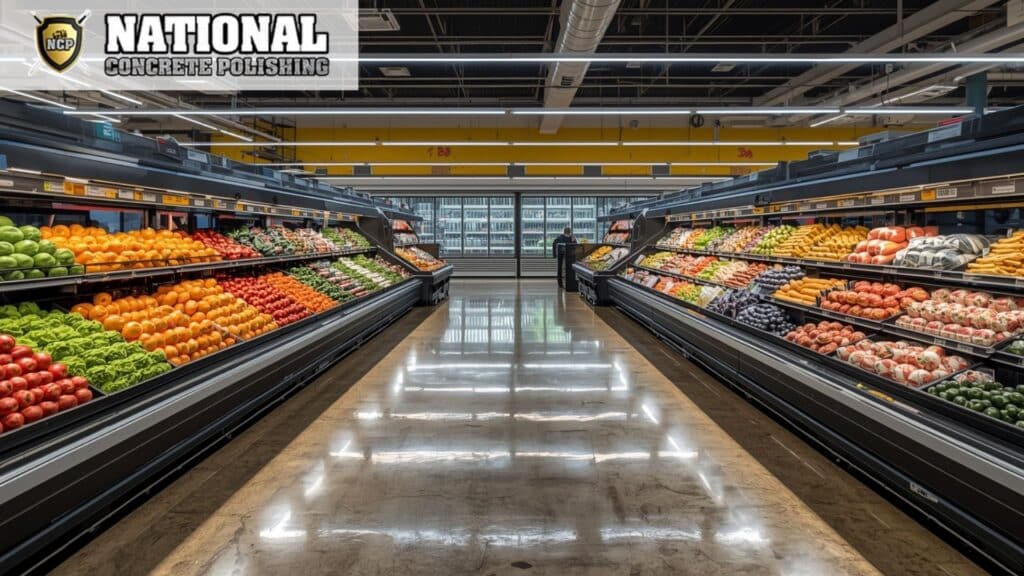
These systems cure to form a hard, durable surface that can withstand the constant traffic and cleaning regimens required in food retail. The thickness of the system is also crucial – while thin mil coatings might suffice for light commercial use, grocery stores typically require systems ranging from 60-125 mils thick to provide adequate durability. The substrate preparation is equally important in grocery store applications.
Concrete floors in supermarkets often have existing coatings or sealers that must be completely removed through mechanical preparation methods such as shot blasting or diamond grinding. This process not only removes old materials but also creates the proper surface profile for optimal epoxy adhesion. In South Florida’s humid environment, moisture testing is critical before installation to prevent future delamination issues.
Primer selection varies based on the specific conditions of each installation. Moisture-tolerant primers may be necessary in areas where concrete moisture levels are elevated, while standard primers work well in climate-controlled areas of the store. The primer creates the critical bond between the concrete substrate and the epoxy system, making proper selection and application essential for long-term performance.
Health Department Compliance and Food Safety Requirements
Grocery stores in South Florida must comply with strict health department regulations that directly impact flooring choices. The Florida Department of Health and local health authorities require food retail establishments to maintain floors that are smooth, non-absorbent, and easily cleanable. Commercial epoxy flooring meets these requirements while providing additional benefits that traditional flooring materials cannot match.
The seamless nature of properly installed epoxy flooring eliminates the grout lines and seams that can harbor bacteria, mold, and other contaminants. This characteristic is particularly important in produce areas where organic matter and moisture are constantly present. Health inspectors look for flooring that can be effectively sanitized without leaving areas where pathogens might survive cleaning protocols.
USDA and FDA guidelines for food retail facilities emphasize the importance of non-porous surfaces that resist penetration by liquids and contaminants. Epoxy flooring systems create a barrier that prevents liquids from penetrating into the substrate, making thorough cleaning and sanitization possible. This is especially critical in areas where raw foods are handled or where refrigerated cases might leak condensation.
The chemical resistance of epoxy systems allows grocery stores to use stronger sanitizing agents when necessary without damaging the floor surface. This capability is essential for maintaining the sterile environment required in food retail while ensuring the flooring system maintains its integrity and appearance over time. Regular deep cleaning with industrial-strength disinfectants becomes possible without concern for floor damage.
Documentation and certification of flooring materials may be required for health department compliance. Reputable epoxy manufacturers provide detailed specifications and certifications that demonstrate their products meet food-safe standards. National Concrete Polishing works with certified materials and can provide the documentation necessary for health department approvals and inspections.
Zone-Specific Flooring Requirements in Supermarkets
Different areas within a grocery store have varying performance requirements that must be considered when selecting commercial epoxy supermarket flooring systems. The produce section, for example, experiences constant exposure to water from misting systems and organic acids from fruits and vegetables. This area requires epoxy systems with enhanced chemical resistance and slip-resistant properties to maintain safety when surfaces become wet.
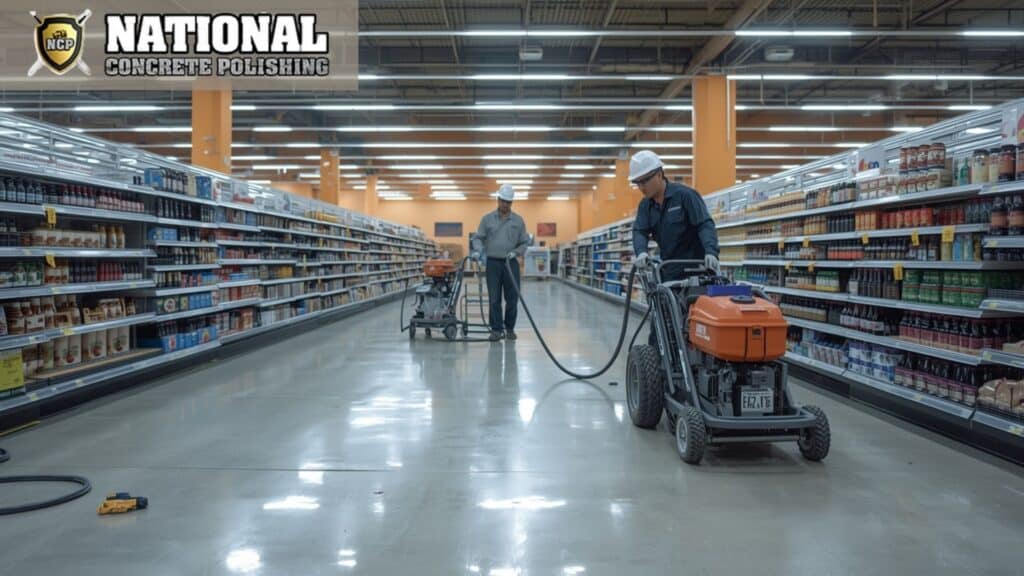
The meat and seafood departments present unique challenges including exposure to animal fats, blood, and frequent washdowns with hot water and sanitizing chemicals. These areas often require epoxy systems with superior chemical resistance and thermal shock resistance to handle the temperature changes associated with cleaning protocols. The flooring must also be designed to facilitate proper drainage to floor drains without creating standing water areas.
Bakery departments require flooring that can handle flour dust, sugar spills, and the heat generated by ovens and other baking equipment. The epoxy system must resist staining from ingredients while providing a surface that can be quickly and thoroughly cleaned between production cycles. Anti-microbial additives may be incorporated into the epoxy system to provide additional protection against bacterial growth.
Loading dock areas experience the heaviest abuse from pallet jacks, delivery trucks, and outdoor weather exposure when doors are open. These areas require the thickest and most durable epoxy systems available, often incorporating aggregate additives for enhanced durability and slip resistance. The system must also be designed to handle the thermal shock of moving from air-conditioned interiors to hot South Florida outdoor temperatures.
Customer shopping areas require a balance of durability and aesthetics, with consideration for cart traffic, foot traffic, and the occasional spill. The flooring must maintain an attractive appearance while providing adequate slip resistance and easy cleanup capabilities. Decorative options such as colored epoxy or subtle textures can enhance the shopping environment while maintaining functionality.
Climate Considerations for South Florida Installations
South Florida’s subtropical climate creates specific challenges for commercial epoxy flooring installations that must be addressed during both the installation process and long-term performance planning. High humidity levels, frequent temperature fluctuations, and seasonal weather patterns all impact the selection and application of epoxy systems in grocery store environments.
Humidity control during installation is critical for proper curing of epoxy systems. South Florida’s high humidity can interfere with the chemical curing process, potentially leading to surface defects such as amine blush or poor adhesion. Professional installers must monitor environmental conditions and may need to use dehumidification equipment or schedule installations during optimal weather windows to ensure proper curing. See how Florida humidity impacts finishes.
The concrete substrate in South Florida buildings often contains higher moisture levels due to the humid environment and proximity to groundwater. Moisture vapor transmission testing is essential before epoxy installation to prevent future delamination issues. If moisture levels are too high, vapor barrier primers or moisture-mitigating systems may be necessary to ensure long-term adhesion of the epoxy system.
Thermal cycling from air conditioning systems and outdoor temperature exposure can stress flooring systems over time. Grocery stores typically maintain cool interior temperatures while loading docks and entrance areas experience outdoor heat. The epoxy system must be formulated to handle these temperature differentials without cracking or losing adhesion to the substrate.
Hurricane season preparations are another consideration unique to South Florida grocery stores. Flooding potential requires flooring systems that can withstand water exposure and be quickly restored to service after weather events. Epoxy flooring’s seamless nature and chemical resistance make it an ideal choice for facilities that may experience flooding, as it can be thoroughly cleaned and sanitized after water exposure without requiring replacement.
UV exposure in areas near large windows or glass storefronts can cause some epoxy systems to yellow or chalk over time. UV-stable topcoats or aliphatic urethane topcoats may be necessary in these areas to maintain color stability and surface integrity. National Concrete Polishing evaluates each installation site for UV exposure and recommends appropriate protective measures.
Installation Process and Timeline Considerations
The installation of commercial epoxy supermarket flooring requires careful planning to minimize disruption to grocery store operations while ensuring optimal results. Most installations are scheduled during overnight hours or planned closure periods to avoid interference with customer traffic and daily operations. The timeline for installation varies based on the size of the area and the complexity of the epoxy system being installed.

Surface preparation typically represents the most time-consuming phase of the installation process. Existing flooring materials must be completely removed, and the concrete substrate must be properly prepared through mechanical methods such as shot blasting or diamond grinding. This process creates the surface profile necessary for optimal epoxy adhesion while removing any contaminants that could interfere with bonding.
Moisture testing and substrate evaluation follow the mechanical preparation phase. Concrete moisture levels must be within acceptable limits for the specific epoxy system being installed. If moisture levels are too high, additional time may be required for drying or the installation of moisture-mitigating systems. Temperature and humidity conditions must also be within specified ranges for proper epoxy curing.
The actual epoxy application process involves multiple steps including primer application, base coat installation, and topcoat application. Each layer requires specific curing time before the next layer can be applied, and environmental conditions must be maintained throughout the process. Professional installers use specialized equipment to ensure uniform application and proper thickness of each layer.
Curing time before the floor can return to service varies based on the specific epoxy system and environmental conditions. Light foot traffic may be possible within 24 hours, but full chemical resistance and heavy traffic capability typically require 5-7 days of curing time. Grocery stores must plan their operations around these curing requirements to ensure optimal performance of the installed system.
Quality control testing throughout the installation process ensures that each phase meets specifications before proceeding to the next step. This includes adhesion testing, thickness measurements, and visual inspection for defects. National Concrete Polishing maintains detailed documentation throughout the installation process to ensure compliance with specifications and warranty requirements.
Maintenance and Long-term Performance
Proper maintenance of commercial epoxy flooring in grocery store environments is essential for maximizing the lifespan and performance of the system. While epoxy floors are relatively low-maintenance compared to traditional flooring materials, they do require specific care protocols to maintain their appearance and functionality over the 15-20 year expected lifespan.
Daily cleaning protocols should include sweeping or dust mopping to remove debris that could act as an abrasive under foot traffic. Wet mopping with neutral pH cleaners removes spills and maintains the sanitary conditions required in food retail environments. Harsh cleaners or acidic solutions should be avoided as they can gradually degrade the epoxy surface, though properly installed commercial-grade systems resist most cleaning chemicals used in grocery stores.
Periodic deep cleaning with mechanical scrubbers helps maintain the slip-resistant properties of textured epoxy surfaces. Over time, soil and residue can build up in the texture, reducing its effectiveness. Professional cleaning equipment and techniques can restore the original slip resistance without damaging the epoxy surface. This is particularly important in high-traffic areas and zones prone to spills.
Inspection and preventive maintenance programs help identify potential issues before they become major problems. Small areas of damage from impacts or chemical exposure can often be repaired with patch materials, preventing the need for complete system replacement. Early intervention is key to maintaining the integrity of the overall flooring system.
Traffic patterns and wear areas should be monitored over time to identify zones that may need additional protection or more frequent maintenance. High-traffic areas such as checkout lanes and main aisles may show wear patterns before other areas of the store. Strategic placement of mats or periodic application of additional topcoat can extend the life of these critical areas.
Seasonal maintenance considerations in South Florida include preparation for hurricane season and managing the effects of high humidity periods. Post-storm inspections ensure that flooding or debris hasn’t damaged the flooring system, while humidity control helps prevent condensation issues that could affect the floor’s slip resistance or appearance.
National Concrete Polishing offers maintenance programs and support services to help grocery store operators maximize the performance and lifespan of their epoxy flooring investment. Regular professional maintenance can significantly extend the life of the system while maintaining compliance with health department requirements and ensuring customer safety.
Frequently Asked Questions
How long does commercial epoxy supermarket flooring last in South Florida’s climate?
Properly installed commercial epoxy flooring systems typically last 15-20 years in grocery store environments, even with South Florida’s challenging climate conditions. The key factors affecting longevity include proper surface preparation, appropriate system selection for the specific application, and adherence to recommended maintenance protocols.
Can epoxy flooring be installed while the grocery store remains open?
Most epoxy installations require closure of the work area due to surface preparation requirements and curing time. However, installations can often be scheduled in phases during overnight hours or planned closure periods to minimize disruption to store operations. The installation timeline depends on the size of the area and complexity of the system.
What makes epoxy flooring better than tile for grocery stores?
Epoxy flooring provides a seamless, non-porous surface without grout lines where bacteria and contaminants can accumulate. It offers superior chemical resistance, easier cleaning and maintenance, and better durability under heavy traffic compared to traditional tile installations.
How does epoxy flooring handle the moisture in produce sections?
Commercial epoxy systems are formulated to resist moisture penetration and can handle the constant exposure to water from misting systems and produce washing. Properly installed systems include slip-resistant additives to maintain safety when surfaces are wet.
What is the cost difference between epoxy and traditional grocery store flooring?
While epoxy systems may have a higher initial installation cost, they typically provide better long-term value due to their durability, low maintenance requirements, and extended lifespan. The total cost of ownership over 15-20 years is often lower than traditional flooring materials that require more frequent replacement.
Does epoxy flooring meet health department requirements for food retail?
Yes, properly installed commercial epoxy flooring meets and exceeds health department requirements for food retail establishments. The seamless, non-porous surface is easily cleanable and resistant to bacterial growth, making it ideal for grocery store environments.
How quickly can epoxy floors return to service after installation?
Light foot traffic is typically possible within 24 hours of installation, but full chemical resistance and heavy traffic capability require 5-7 days of curing time. The exact timeline depends on environmental conditions and the specific epoxy system used.
Can damaged areas of epoxy flooring be repaired without replacing the entire floor?
Yes, localized damage to epoxy flooring can often be repaired using patch materials and techniques that blend seamlessly with the existing floor. Early intervention and professional repair techniques can extend the life of the overall system significantly.
Conclusion
The selection of appropriate flooring for South Florida grocery stores requires careful consideration of the unique challenges presented by the subtropical climate, stringent health department regulations, and demanding operational requirements of food retail environments. Commercial epoxy supermarket flooring has proven to be the optimal solution for these complex requirements, providing the durability, safety, and sanitary conditions necessary for successful grocery operations.
The investment in quality commercial epoxy flooring pays dividends through reduced maintenance costs, improved compliance with health regulations, enhanced customer safety, and extended service life compared to traditional flooring materials. The seamless, chemical-resistant surface provided by epoxy systems addresses the specific challenges of grocery store environments while maintaining an attractive appearance that enhances the shopping experience.
National Concrete Polishing brings specialized expertise in commercial epoxy applications to South Florida’s grocery retail market. Their understanding of local climate conditions, health department requirements, and operational challenges ensures that each installation is properly designed and executed for optimal long-term performance. The combination of quality materials, professional installation, and ongoing support services provides grocery store operators with flooring solutions that support their business objectives while meeting the highest standards for food safety and customer service.
As the grocery retail industry continues to evolve with new technologies and changing consumer expectations, the foundation provided by quality epoxy flooring remains constant. The durability, flexibility, and performance characteristics of modern epoxy systems position them as the flooring solution of choice for forward-thinking grocery retailers who recognize the importance of infrastructure investments in their long-term success.
source https://nationalconcretepolishing.net/commercial-epoxy-supermarket/


No comments:
Post a Comment