Epoxy floors withstand heavy machinery, chemical spills, and daily wear in industrial spaces. Yet improper cleaning methods erode their glossy finish faster than forklift traffic. Choosing the right solution protects your investment—and prevents costly recoating.
These durable surfaces dominate garages, hospitals, and warehouses for good reason. Their seamless design resists stains and simplifies sweeping. But harsh chemicals like ammonia or vinegar break down the protective top layer over time. Even pressure washers can force water under the coating if misused.
National Concrete Polishing, a South Florida leader with 15+ years of expertise, reports that 40% of service calls involve damage from acidic cleaners. “Clients often use dish soap or bleach without realizing it dulls the surface,”. For lasting results, stick to pH-neutral formulas designed for epoxy flooring needs.
Key Takeaways
- pH-balanced cleaners prevent surface degradation better than household products
- Regular sweeping reduces abrasive dirt buildup between deep cleanings
- Avoid high-pressure washers unless professionally recommended
- Immediate spill cleanup maintains slip resistance and visual appeal
what is the best cleaner for epoxy floors
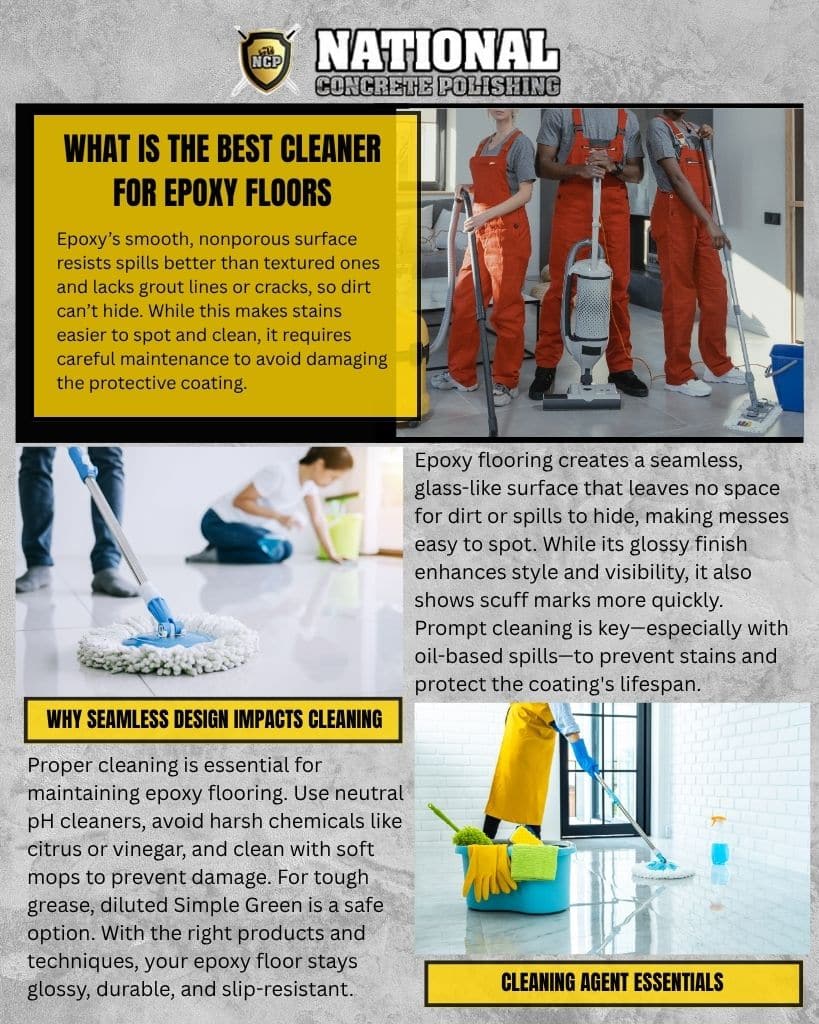
The best cleaner for epoxy floors is a mix of warm water and a small amount of ammonia—about 2 to 3 ounces of ammonia per gallon of water. For tougher spots, non-toxic, biodegradable cleaning products. The most commonly used version is Simple Green All-Purpose Cleaner, which is a concentrated, water-based cleaner that works on many surfaces, including epoxy floors (when diluted). You can also use a pH-neutral cleaner specifically labeled safe for epoxy.
Avoid acidic or abrasive cleaners, vinegar, and soap-based products—they can damage or leave residue.
Epoxy’s smooth, nonporous coating repels spills better than textured surfaces. Without grout lines or cracks, dirt can’t hide—making stains instantly noticeable. This visibility speeds up maintenance but demands proper techniques to avoid damaging the protective layer.
Why Seamless Design Impacts Cleaning
Industrial-grade epoxy flooring bonds tightly to concrete, creating a glass-like shield. Heavy foot traffic leaves scuff marks faster on this glossy surface compared to tile. National Concrete Polishing advises clients: “Immediate spill removal prevents permanent discoloration, especially with oil-based liquids.”
Cleaning Agent Essentials
Three factors determine cleaner safety:
- pH balance: Neutral formulas (6-8 pH) protect the coating’s integrity
- Chemical content: Avoid citrus-based or enzymatic products that degrade epoxy
- Application method: Soft mops prevent micro-scratches better than stiff brushes
Vinegar-water mixtures erode shine within months, while ammonia creates hazy patches. For stubborn grease, professionals recommend diluted Simple Green (1 oz per gallon water) instead of harsh solvents. Regular care preserves slip resistance and keeps floors gleaming for years.
Step-by-Step Guide to Cleaning Your Epoxy Floors
Proper maintenance keeps epoxy flooring resilient against daily wear while preserving its glossy finish. Follow these professional-approved steps from National Concrete Polishing to ensure longevity without compromising the coating’s integrity.
Preparation and Debris Removal
Start by sweeping loose particles with a soft-bristle broom or vacuum. Embedded grit acts like sandpaper, creating micro-scratches during cleaning. Pay extra attention to corners and edges where debris accumulates.
Mixing and Applying the Cleaning Solution
Combine 1 oz of Simple Green with 1 gallon of hot water in a bucket. Avoid ammonia-based or citrus cleaners—they degrade the protective layer. Pour the solution evenly across small sections, letting it sit for 3-5 minutes to loosen grease.
Effective Rinsing and Drying Techniques
Scrub gently with a deck brush, focusing on stained areas. Rinse thoroughly using a garden hose or low-pressure washer to prevent water seepage. Remove standing water immediately with a neoprene squeegee, then air-dry with fans for faster results. National Concrete Polishing technicians emphasize: “Residual moisture attracts dirt, defeating the purpose of deep cleaning.”
Expert Tips on Epoxy Floor Maintenance and Cleaning Techniques

Preserving your floor’s glossy finish requires consistent care tailored to its unique properties. National Concrete Polishing technicians emphasize that proactive routines prevent 80% of common coating issues in both homes and warehouses.
Daily and Weekly Maintenance Best Practices
Sweep daily with electrostatic dust mops to capture fine particles. Immediate spill cleanup prevents stains from setting—blot liquids with microfiber cloths instead of rubbing. For weekly care, mix ¼ cup pH-neutral cleaner with 1 gallon warm water.
| Task | Frequency | Tool | Pro Tip |
|---|---|---|---|
| Debris Removal | Daily | Soft-bristle broom | Angle bristles to lift grit |
| Spot Cleaning | As needed | Microfiber pad | Blot, don’t scrub |
| Deep Clean | Weekly | Foam-pad mop | Change rinse water often |
Using the Right Cleaning Equipment
Choose non-abrasive tools to protect the surface. Auto-scrubbers with soft pads work well for large areas—set to 300 RPM maximum. Avoid steel wool or stiff-bristle brushes that create micro-scratches. For home garages, flat-head mops with removable covers simplify rinsing.
Commercial kitchens benefit from walk-behind scrubbers with dual tanks. Always test new equipment in inconspicuous areas first. Need customized advice? Call us and one of our experts will be happy to help.
Conclusion
Maintaining epoxy surfaces properly ensures they remain durable and visually striking for decades. Selecting pH-neutral solutions prevents chemical erosion, while daily sweeping stops abrasive dirt from scratching the coating. Immediate spill removal preserves slip resistance and shine.
Follow the outlined routine: use soft tools, avoid harsh soaps, and rinse thoroughly. These steps protect your investment while minimizing wear. Well-kept flooring resists stains better and maintains its glossy appeal through heavy use.
National Concrete Polishing brings 15+ years of South Florida expertise to every project. For stubborn stains or recoating needs, contact us today.
Consistent care extends your surface’s lifespan dramatically. Pair smart product choices with regular upkeep—your floors will reward you with lasting performance and professional-grade aesthetics.
FAQ
Can you use a pressure washer on epoxy floors?
Yes, but ensure the power washer is set to low or medium settings. High-pressure streams can damage the coating over time. Pair it with mild cleaners like Simple Green for stubborn stains.
Does vinegar harm epoxy flooring?
Undiluted vinegar may dull the surface. Mix ½ cup white vinegar per gallon of warm water for safe cleaning. Avoid acidic solutions if your floor has visible wear or cracks.
How do you remove oil stains from epoxy surfaces?
Blot spills immediately with absorbent cloths. For dried stains, apply a degreaser like Zep Citrus Degreaser and scrub gently. Rinse thoroughly to prevent residue buildup.
Are ammonia-based cleaners safe for epoxy coatings?
Avoid ammonia—it degrades the finish. Opt for pH-neutral solutions instead. Brands like Spartan Chemical’s EP Floor Cleaner protect shine without harsh chemicals.
What equipment works best for daily epoxy floor care?
Use microfiber mops for dust and soft-bristle brooms for debris. A shop vac handles larger particles. For deep cleans, auto scrubbers with non-abrasive pads maintain luster.
How often should you reseal epoxy flooring?
High-traffic areas may need resealing every 2–3 years. Inspect for fading or scratches annually. Use UV-resistant topcoats like ArmorPoxy to extend longevity.
source https://nationalconcretepolishing.net/what-is-the-best-cleaner-for-epoxy-floors/


No comments:
Post a Comment